Author

Robert Cialdini
Robert Beno Cialdini is an American psychologist and author. He is the Regents' Professor Emeritus of Psychology and Marketing at Arizona State University. Wikipedia
4 books in the library · referenced in 1 book
Explore Robert Cialdini's worksBooks by Robert Cialdini
Influence: Science and Practice
Robert Cialdini
Influence: The Psychology of Persuasion
Robert Cialdini
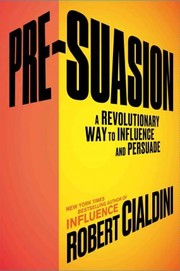
Pre-Suasion
Robert Cialdini
Yes!: 50 Scientifically Proven Ways to Be Persuasive
Noah J. Goldstein, Steve J. Martin, Robert Cialdini
Showing 4 of 4 books
Books Robert Cialdini mentions & references
- Explore
 A Theory of Cognitive DissonanceLeon FestingerMentioned in 2 of their booksIn Influence: The Psychology of Persuasion: Provides the foundational theory for the chapter on commitment and consistency.In Influence: Science and Practice: Supplies the theoretical foundation for commitment and consistency pressures in human decision-making.
- Explore
 Obedience to Authority: An Experimental ViewStanley MilgramMentioned in 2 of their booksIn Influence: The Psychology of Persuasion: Cited extensively to demonstrate human deference to perceived authority figures.In Influence: Science and Practice: Provides foundational experimental evidence on unquestioning deference to authority figures.
- Explore
 Predictably Irrational: The Hidden Forces That Shape Our DecisionsDan ArielyMentioned in 2 of their booksIn Pre-Suasion: Referenced to illustrate how arbitrary anchors and contextual comparisons systematically distort judgment.In Yes!: 50 Scientifically Proven Ways to Be Persuasive: Cited for behavioral experiments showing how arbitrary price anchors and decoy options manipulate decision-making.
- Explore
 Strangers to Ourselves: Discovering the Adaptive UnconsciousTimothy D. WilsonMentioned in 2 of their booksIn Pre-Suasion: Cited regarding the nonconscious mental processes that govern behavior without deliberate awareness.In Yes!: 50 Scientifically Proven Ways to Be Persuasive: Referenced to illustrate that people are often blind to the true psychological factors driving their choices.
- Explore
 The Hidden PersuadersVance PackardMentioned in 2 of their booksIn Influence: The Psychology of Persuasion: Referenced in discussions of psychological exploitation in consumer advertising and sales tactics.In Influence: Science and Practice: Explores motivational research and psychological manipulation in commercial advertising.
- Explore
The Presentation of Self in Everyday LifeErving GoffmanMentioned in 2 of their booksIn Influence: Science and Practice: Informs the understanding of impression management and social compliance in interpersonal interactions.In Influence: The Psychology of Persuasion: Referenced regarding impression management, social roles, and public consistency pressures.
- Explore
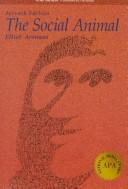 The Social AnimalElliot AronsonMentioned in 2 of their booksIn Pre-Suasion: Cited for fundamental social psychological principles regarding conformity, self-justification, and human connection.In Influence: The Psychology of Persuasion: Cited regarding experimental social psychology, conformity pressures, and persuasion dynamics.
- Explore
A Theory of Psychological ReactanceJack W. BrehmIn Influence: Science and Practice: Explains how the restriction of personal freedom triggers resistance, underpinning the scarcity principle.
- Explore
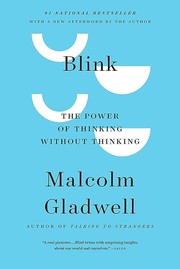 Blink: The Power of Thinking Without ThinkingMalcolm GladwellIn Yes!: 50 Scientifically Proven Ways to Be Persuasive: Cited regarding snap judgments, rapid cognitive heuristics, and how subtle environmental cues influence choices.
 Contagious: Why Things Catch OnJonah BergerIn Pre-Suasion: Cited regarding environmental triggers and how top-of-mind cues drive behavior and discussion.Explore
Decisive: How to Make Better Choices in Life and WorkChip Heath and Dan HeathIn Pre-Suasion: Referenced for the spotlight effect in decision-making and overcoming narrow framing.Explore
- Explore
 Getting to Yes: Negotiating Agreement Without Giving InRoger Fisher and William UryIn Yes!: 50 Scientifically Proven Ways to Be Persuasive: Referenced in discussions of negotiation tactics, specifically finding mutual gain and managing concessions.
- Explore
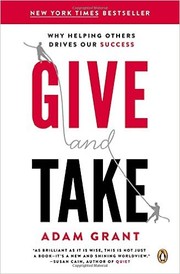 Give and Take: A Revolutionary Approach to SuccessAdam GrantIn Pre-Suasion: Mentioned in discussions on the dynamics of reciprocity and relationship-building in persuasion.
 How to Win Friends and Influence PeopleDale CarnegieIn Yes!: 50 Scientifically Proven Ways to Be Persuasive: Mentioned as the classic anecdotal guide to interpersonal persuasion, contrasted with evidence-based social psychology.Explore
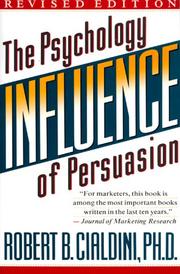 Influence: The Psychology of PersuasionRobert CialdiniIn Pre-Suasion: Serves as the foundational predecessor, with Pre-Suasion addressing what happens immediately before the influence attempt occurs.Explore
- ExploreInfluence: The Psychology of PersuasionRobert B. CialdiniIn Yes!: 50 Scientifically Proven Ways to Be Persuasive: Serves as the foundational theoretical framework whose six core principles of social influence are expanded into practical scenarios.
- Explore
 King Solomon's RingKonrad LorenzIn Influence: The Psychology of Persuasion: Cited for ethological observations regarding innate response triggers and fixed behavior sequences.
- Explore
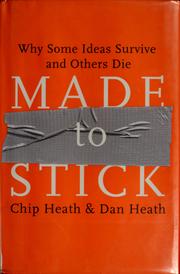 Made to Stick: Why Some Ideas Survive and Others DieChip Heath and Dan HeathIn Yes!: 50 Scientifically Proven Ways to Be Persuasive: Referenced regarding effective message crafting and the psychology of making communication memorable and actionable.
- Explore
Nudge: Improving Decisions About Health, Wealth, and HappinessRichard H. Thaler and Cass R. SunsteinIn Pre-Suasion: Referenced regarding choice architecture and how subtle environmental defaults steer decisions.
- Explore
Social Learning TheoryAlbert BanduraIn Influence: Science and Practice: Demonstrates how observational modeling guides individual actions, informing social proof dynamics.
- Explore
 Sociobiology: The New SynthesisEdward O. WilsonIn Influence: The Psychology of Persuasion: Referenced for evolutionary perspectives on reciprocity and social cooperation.
- Explore
 The Invisible Gorilla: How Our Intuitions Deceive UsChristopher Chabris and Daniel SimonsIn Pre-Suasion: Cited to illustrate how extreme focal attention renders individuals completely blind to surrounding stimuli.
- Explore
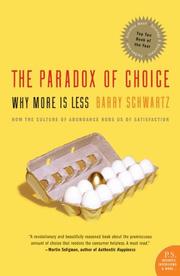 The Paradox of Choice: Why More Is LessBarry SchwartzIn Yes!: 50 Scientifically Proven Ways to Be Persuasive: Cited to explain how offering too many options paralyzes consumers and reduces overall purchasing rates.
- Explore
 The Study of InstinctNikolaas TinbergenIn Influence: The Psychology of Persuasion: Referenced regarding animal fixed-action patterns and automatic trigger features that parallel human compliance.
 Thinking, Fast and SlowDaniel KahnemanIn Pre-Suasion: Cited for its concepts of associative coherence, cognitive ease, and the distinction between fast and slow thinking systems.Explore
- Explore
 To Sell Is Human: The Surprising Truth About Moving OthersDaniel H. PinkIn Pre-Suasion: Referenced for modern perspectives on persuasion and how attunement affects negotiation outcomes.
- Explore
When Prophecy FailsLeon Festinger, Henry Riecken, and Stanley SchachterIn Influence: Science and Practice: Illustrates how social proof and cognitive commitment strengthen belief systems following disconfirmation.
- Explore
 When Prophecy FailsLeon Festinger, Henry W. Riecken, and Stanley SchachterIn Influence: The Psychology of Persuasion: Cited to illustrate how extreme commitment and social proof reinforce beliefs after disconfirmation.
- Explore
Winning Through IntimidationRobert J. RingerIn Influence: Science and Practice: Cited as a commercial sales text exemplifying real-world scarcity and leverage tactics.
- Explore
 Yes!: 50 Scientifically Proven Ways to Be PersuasiveNoah J. Goldstein, Steve J. Martin, and Robert B. CialdiniIn Pre-Suasion: Referenced as prior collaborative research demonstrating small procedural changes that yield large behavioral shifts.
Books that mention & reference Robert Cialdini
Showing 1 of 1 books