
A Conflict of Visions
Thomas SowellEN
- Publish date
- 1987
- Publisher
- Quill
- Description
Where to read & listen
This page may contain affiliate links. We may earn from qualifying purchases at no additional cost to you.
Book data & covers provided by Google Books and Open Library. Connections and summaries generated with Gemini AI.
Report incorrect dataBooks mentioned & referenced in A Conflict of Visions
Suggested by AI, not verified against the full text. Check the original book before using them as a source.
- Citation
Sketch for a Historical Picture of the Progress of the Human Mind
Marquis de Condorcet
Examined alongside Godwin as an archetype of the unconstrained vision of unlimited human progress.
High relevanceExplore  Citation
The Social Contract
Jean-Jacques Rousseau
Referenced to illustrate how the unconstrained vision diagnoses societal institutions as corrupting inherently benign human nature.
High relevanceExplore Citation
The Wealth of Nations
Adam Smith
Cited to explain systemic incentives and unintended social consequences central to the constrained vision.
High relevanceExplore Citation
A Theory of Justice
John Rawls
Critiqued as a prominent modern manifestation of the unconstrained pursuit of cosmic justice.
High relevanceExplore Citation
An Enquiry Concerning Political Justice
William Godwin
Served as Sowell's primary benchmark text representing the unconstrained vision of human perfectibility and reason.
High relevanceExplore Citation
The Constitution of Liberty
Friedrich A. Hayek
Informs Sowell's treatment of dispersed, systemic knowledge versus articulated rationality.
High relevanceExplore Citation
Reflections on the Revolution in France
Edmund Burke
Analyzed as a premier articulation of the constrained vision valuing evolved traditions over articulated rational design.
High relevanceExplore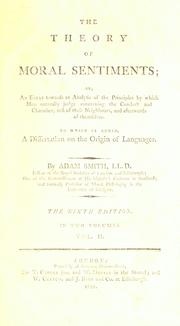 Citation
The Theory of Moral Sentiments
Adam Smith
Cited extensively to establish the classical foundation of the constrained vision regarding immutable human nature.
High relevanceExplore- Citation
The Federalist Papers
Alexander Hamilton, James Madison, and John Jay
Used to illustrate the constrained vision applied to constitutional design, checks and balances, and institutional trade-offs.
High relevanceExplore 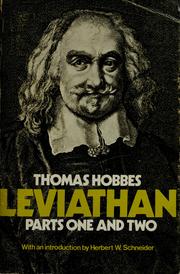 Citation
Leviathan
Thomas Hobbes
Analyzed in the context of order, power, and the necessity of social constraints on human self-interest.
Medium relevanceExplore Citation
Anarchy, State, and Utopia
Robert Nozick
Referenced as a modern articulation of process-oriented, constrained concepts of justice and rights.
Medium relevanceExplore Citation
On Liberty
John Stuart Mill
Discussed as an influential hybrid thinker who bridged elements of both visions regarding social decision-making.
Medium relevanceExplore
There may be more citations. We show up to 12 per book to keep the list manageable.
Recommendations
 AI Recommendation
The Righteous Mind: Why Good People Are Divided by Politics and Religion
Jonathan Haidt
Provides moral psychology research supporting Sowell's thesis on why political factions operate from fundamentally divergent premises.
High relevanceExplore AI Recommendation
The Vision of the Anointed
Thomas Sowell
Serves as the direct practical sequel detailing how the unconstrained vision influences contemporary public policy and culture.
High relevanceExplore AI Recommendation
The Blank Slate: The Modern Denial of Human Nature
Steven Pinker
Builds explicitly on Sowell's dichotomy to explain modern ideological debates over human biology and cognition.
High relevanceExplore AI Recommendation
Knowledge and Decisions
Thomas Sowell
Develops the deep social and economic epistemology that forms the intellectual backbone of the visions framework.
High relevanceExplore AI Recommendation
The Fatal Conceit: The Errors of Socialism
Friedrich A. Hayek
Explores how the intellectual ambition of social engineers reflects the unconstrained dismissal of evolved social traditions.
Medium relevanceExplore- AI Recommendation
The Revolt of the Masses
José Ortega y Gasset
Examines the societal consequences of forgetting the fragile civilizational constraints that enable human freedom.
Medium relevanceExplore