
Basic Economics
Thomas SowellEN
- Publish date
- 2000
- Publisher
- Cheng bang wen hua shi ye gu fen you xian gong si
- Description
Where to read & listen
This page may contain affiliate links. We may earn from qualifying purchases at no additional cost to you.
Book data & covers provided by Google Books and Open Library. Connections and summaries generated with Gemini AI.
Report incorrect dataBooks mentioned & referenced in Basic Economics
Suggested by AI, not verified against the full text. Check the original book before using them as a source.
 Citation
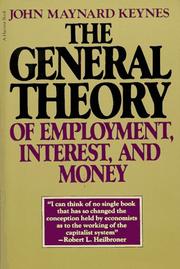
The General Theory of Employment, Interest and Money
John Maynard Keynes
Referenced critically in discussions contrasting Keynesian demand management with classical supply-side perspectives.
High relevanceExplore Citation
The Road to Serfdom
Friedrich Hayek
Cited to argue against the feasibility of central economic planning and the inevitable erosion of freedom under state control.
High relevanceExplore- Citation
Free to Choose
Milton Friedman and Rose Friedman
Referenced when demonstrating the real-world drawbacks of price controls, trade barriers, and welfare systems.
High relevanceExplore  Citation
The Wealth of Nations
Adam Smith
Cited frequently to illustrate foundational market mechanisms, the division of labor, and the unintended social benefits of self-interested exchange.
High relevanceExplore Citation
Economics in One Lesson
Henry Hazlitt
Serves as a philosophical foundation for evaluating economic policies by their long-term, secondary consequences rather than immediate intentions.
High relevanceExplore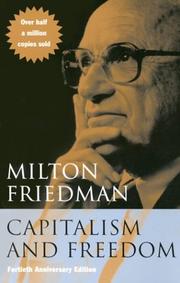 Citation
Capitalism and Freedom
Milton Friedman
Referenced regarding the efficiency of competitive markets versus government intervention in areas like licensing and education.
High relevanceExplore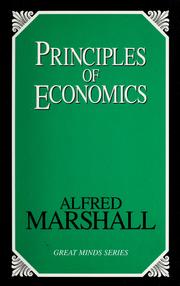 Citation
Principles of Economics
Alfred Marshall
Cited on fundamental principles of marginal utility, supply, and demand schedules.
Medium relevanceExplore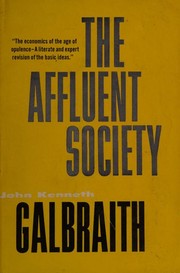 Citation
The Affluent Society
John Kenneth Galbraith
Examined critically regarding claims about manufactured consumer demand and the balance between public and private expenditure.
Medium relevanceExplore Citation
Risk, Uncertainty and Profit
Frank H. Knight
Referenced to explain the vital role of profit and loss as compensation for bearing uninsurable economic uncertainty.
Medium relevanceExplore Citation
An Essay on the Principle of Population
Thomas Robert Malthus
Cited in chapters on resource constraints and historical misconceptions regarding population growth and food supply.
Medium relevanceExplore Citation
Losing Ground
Charles Murray
Cited to illustrate how well-intended welfare programs can create counterproductive incentives for recipients.
Medium relevanceExplore
Recommendations
 AI Recommendation
Applied Economics: Thinking Beyond Stage One
Thomas Sowell
Serves as the direct follow-up applying the principles introduced in Basic Economics to complex public policy debates.
High relevanceExplore AI Recommendation
Economic Facts and Fallacies
Thomas Sowell
Provides an in-depth examination of widespread economic myths that Basic Economics briefly refutes.
High relevanceExplore AI Recommendation
Human Action
Ludwig von Mises
Presents a comprehensive treatise on Austrian economics, sharing Sowell's emphasis on individual decision-making and price coordination.
High relevanceExplore AI Recommendation
The Undercover Economist
Tim Harford
Explains core microeconomic principles such as price discrimination and market failures in everyday settings.
Medium relevanceExplore AI Recommendation
The Armchair Economist
Steven E. Landsburg
Offers an accessible, real-world exploration of economic incentives and price theory that complements Sowell's approach.
Medium relevanceExplore