- Publish date
- 2017
- Publisher
- Bodley Head Adults
- Description
Where to read & listen
This page may contain affiliate links. We may earn from qualifying purchases at no additional cost to you.
Book data & covers provided by Google Books and Open Library. Connections and summaries generated with Gemini AI.
Report incorrect dataBooks cited in Behave
Suggested by AI, not verified against the full text. Check the original book before using them as a source.
 Citation
The Better Angels of Our Nature
Steven Pinker
Sapolsky examines Pinker's claims regarding historical declines in violence through a biological and cultural lens.
High relevanceExplore Citation
Chimpanzee Politics
Frans de Waal
Cited frequently to compare primate social hierarchies, reconciliation behaviors, and coalitionary violence to humans.
High relevanceExplore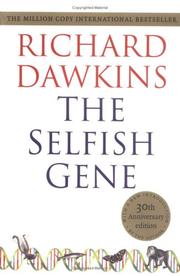 Citation
The Selfish Gene
Richard Dawkins
Serves as a fundamental reference for kin selection, inclusive fitness, and game theory in evolutionary biology.
High relevanceExplore Citation
The Righteous Mind
Jonathan Haidt
Cited extensively to explore moral intuitionism, disgust, and the evolutionary roots of political divergence.
High relevanceExplore Citation
Thinking, Fast and Slow
Daniel Kahneman
Referenced for dual-process theory, unconscious heuristics, and cognitive biases shaping human decision-making.
High relevanceExplore- Citation
Moral Tribes
Joshua Greene
Cited regarding fMRI neuroimaging studies during moral dilemmas, contrasting automatic emotional responses with deliberative calculation.
High relevanceExplore  Citation
The Blank Slate
Steven Pinker
Critiqued and referenced regarding gene-environment interactions and debates surrounding modern evolutionary psychology.
Medium relevanceExplore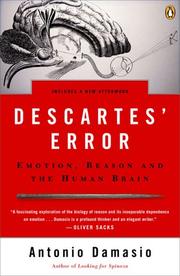 Citation
Descartes' Error
Antonio Damasio
Referenced for the critical role emotion and the ventromedial prefrontal cortex play in social decision-making.
Medium relevanceExplore Citation
Sociobiology: The New Synthesis
Edward O. Wilson
Foundational text referenced regarding the evolutionary basis of animal and human social behavior.
Medium relevanceExplore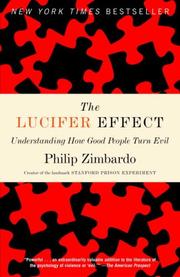 Citation
The Lucifer Effect
Philip Zimbardo
Discussed in analyzing situational pressures, institutional obedience, and how normal people commit cruel acts.
Medium relevanceExplore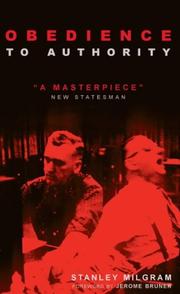 Citation
Obedience to Authority
Stanley Milgram
Examined to evaluate psychological and neurobiological mechanisms underlying compliance with malevolent authority.
Medium relevanceExplore Citation
Nonzero: The Logic of Human Destiny
Robert Wright
Cited in the context of evolutionary game theory and non-zero-sum cooperative outcomes.
Medium relevanceExplore
There may be more citations. We show up to 12 per book to keep the list manageable.
Recommendations
 AI Recommendation
The Goodness Paradox
Richard Wrangham
Explores the evolutionary split between proactive and reactive aggression in humans, mirroring Sapolsky's dualities.
High relevanceExplore AI Recommendation
The WEIRDest People in the World
Joseph Henrich
Complements Sapolsky's analysis of cultural neuroscience and gene-culture coevolution across human populations.
High relevanceExplore AI Recommendation
Determined: A Science of Life without Free Will
Robert Sapolsky
Direct successor expanding Behave's biological determinism arguments to dismantle free will and moral responsibility.
High relevanceExplore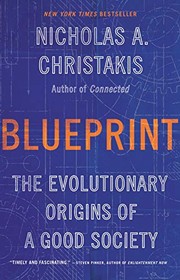 AI Recommendation
Blueprint: The Evolutionary Origins of a Good Society
Nicholas A. Christakis
Examines genetic and evolutionary roots of cooperation, love, and friendship that parallel Sapolsky's prosocial findings.
Medium relevanceExplore AI Recommendation
Seven and a Half Lessons About the Brain
Lisa Feldman Barrett
Offers a concise, modern neuroscience counterpoint to triune brain concepts critiqued in Behave.
Medium relevanceExplore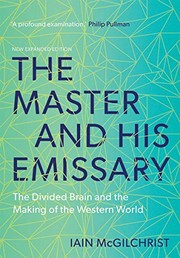 AI Recommendation
The Master and His Emissary
Iain McGilchrist
Explores neurobiology's broader influence on human culture, cognition, and modern behavior.
Medium relevanceExplore