- Publish date
- 1927
- Publisher
- Akademie-Verlag
- Description
Where to read & listen
This page may contain affiliate links. We may earn from qualifying purchases at no additional cost to you.
Book data & covers provided by Google Books and Open Library. Connections and summaries generated with Gemini AI.
Report incorrect dataBooks cited in Being and Time
Suggested by AI, not verified against the full text. Check the original book before using them as a source.
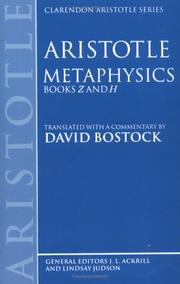 Citation
Metaphysics
Aristotle
Extensively analyzed regarding the primordial understanding of Being, substance, and the limits of ancient ontology.
High relevanceExplore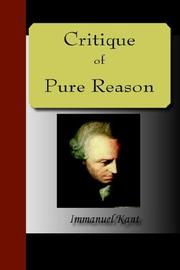 Citation
Critique of Pure Reason
Immanuel Kant
Examined in depth concerning the schematism of understanding and the preliminary link between time and Being.
High relevanceExplore Citation
The Concept of Anxiety
Søren Kierkegaard
Deeply influences Heidegger's existential analysis of anxiety, death, and authentic versus inauthentic existence.
High relevanceExplore Citation
Sophist
Plato
Quoted in the opening epigraph to introduce the central forgotten question of the meaning of Being.
High relevanceExplore Citation
Logical Investigations
Edmund Husserl
Provides the foundational phenomenological method and intentional analysis that Heidegger adopts and transforms ontologically.
High relevanceExplore Citation
Meditations on First Philosophy
René Descartes
Critiqued for defining the world as res extensa and overlooking the primordial phenomenon of being-in-the-world.
High relevanceExplore Citation
Confessions
Augustine of Hippo
Cited extensively regarding the phenomenological experience of time, memory, and human fallenness into the world.
Medium relevanceExplore
Recommendations
 AI Recommendation
Kant and the Problem of Metaphysics
Martin Heidegger
Written shortly after Being and Time to complete the planned phenomenological deconstruction of Kant's doctrine of time.
High relevanceExplore- AI Recommendation
Phenomenology of Perception
Maurice Merleau-Ponty
Expands Heidegger's being-in-the-world through a radical phenomenological account of embodiment and spatiality.
Medium relevanceExplore  AI Recommendation
Being and Nothingness
Jean-Paul Sartre
Translates Heidegger's ontology of Dasein into an existentialist framework centered on freedom and consciousness.
Medium relevanceExplore