- Publish date
- 1885
- Publisher
- Penguin Books
- Description
Where to read & listen
This page may contain affiliate links. We may earn from qualifying purchases at no additional cost to you.
Book data & covers provided by Google Books and Open Library. Connections and summaries generated with Gemini AI.
Report incorrect dataBooks cited in Beyond Good and Evil
Suggested by AI, not verified against the full text. Check the original book before using them as a source.
 Citation
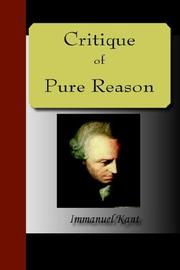
Critique of Pure Reason
Immanuel Kant
Nietzsche critically dismantles Kantian synthetic a priori judgments and moral dogmatism.
High relevanceExplore Citation
Ethics
Baruch Spinoza
Nietzsche mocks Spinoza's geometric method while engaging with his views on affect and self-preservation.
High relevanceExplore Citation
Meditations on First Philosophy
René Descartes
He attacks Descartes' premise of the 'cogito' as an unjustified immediate certainty.
High relevanceExplore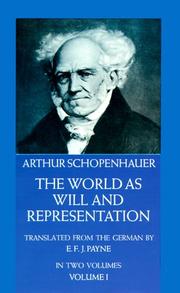 Citation
The World as Will and Representation
Arthur Schopenhauer
He critiques Schopenhauer's concept of will and pessimistic moral resignation.
High relevanceExplore Citation
The Republic
Plato
Platonism is targeted as the foundational European dogmatism and invention of the 'Good in itself.'
High relevanceExplore Citation
Phenomenology of Spirit
G. W. F. Hegel
Nietzsche critiques Hegelian historical teleology and dialectical synthesis.
Medium relevanceExplore- Citation
Theoria Philosophiae Naturalis
Roger Joseph Boscovich
Nietzsche praises Boscovich for overthrowing material atomism, comparing his achievement to Copernicus.
Medium relevanceExplore  Citation
Utilitarianism
John Stuart Mill
Nietzsche attacks English utilitarianism as the vulgar morality of the herd.
Medium relevanceExplore Citation
The Social Contract
Jean-Jacques Rousseau
Rousseau's egalitarian ideas are attacked as decadent moral sentimentality.
Medium relevanceExplore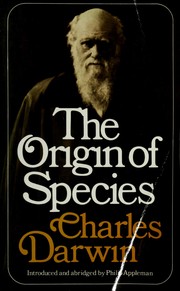 Citation
On the Origin of Species
Charles Darwin
He rejects Darwinian survival mechanisms in favor of the expansionist will to power.
Medium relevanceExplore
Recommendations
 AI Recommendation
The Ego and Its Own
Max Stirner
Shares a radical critique of moral abstractions and universalist philosophical systems.
High relevanceExplore AI Recommendation
Notes from Underground
Fyodor Dostoevsky
Provides a parallel psychological investigation of ressentiment, human irrationality, and modern malaise.
High relevanceExplore AI Recommendation
Discipline and Punish
Michel Foucault
Expands on Nietzsche's concepts of genealogy, pervasive power relations, and institutional discipline.
High relevanceExplore AI Recommendation
Nietzsche and Philosophy
Gilles Deleuze
A foundational philosophical examination of the will to power and the critique of values.
Medium relevanceExplore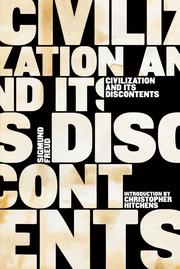 AI Recommendation
Civilization and Its Discontents
Sigmund Freud
Explores the psychological suppression of natural instincts required to build civilized morality.
Medium relevanceExplore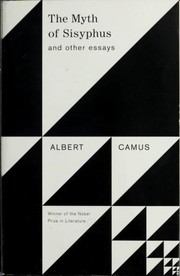 AI Recommendation
The Myth of Sisyphus
Albert Camus
Directly confronts the existential consequences of nihilism and the death of God.
Medium relevanceExplore