
Bowling Alone
Robert D. PutnamEN
- Publish date
- 2000
- Publisher
- Simon & Schuster Audio
- Description
Where to read & listen
This page may contain affiliate links. We may earn from qualifying purchases at no additional cost to you.
Book data & covers provided by Google Books and Open Library. Connections and summaries generated with Gemini AI.
Report incorrect dataBooks mentioned & referenced in Bowling Alone
Suggested by AI, not verified against the full text. Check the original book before using them as a source.
 Citation
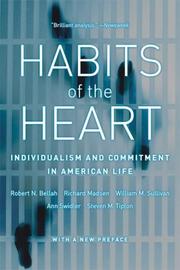
Habits of the Heart: Individualism and Commitment in American Life
Robert N. Bellah
Referenced regarding the cultural tension between American individualism and civic community.
High relevanceExplore Citation
Democracy in America
Alexis de Tocqueville
Provides the foundational historical observation of Americans' unique propensity to form civil associations.
High relevanceExplore Citation
Civic Engagement in American Democracy
Theda Skocpol and Morris P. Fiorina
Cited for historical research into the rise and structure of large cross-class civic federations in the United States.
High relevanceExplore Citation
Foundations of Social Theory
James S. Coleman
Supplies the conceptual and sociological foundation for Putnam's definition of social capital.
High relevanceExplore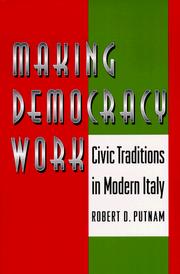 Citation
Making Democracy Work: Civic Traditions in Modern Italy
Robert D. Putnam
Putnam's prior comparative study that established his central thesis linking regional civic health to institutional performance.
High relevanceExplore Citation
Voice and Equality: Civic Voluntarism in American Politics
Sidney Verba, Kay Lehman Schlozman, and Henry E. Brady
Extensively cited for empirical evidence and models of American civic volunteering and political participation.
High relevanceExplore Citation
The Death and Life of Great American Cities
Jane Jacobs
Cited as an essential early source that introduced and framed the concept of social capital in urban neighborhoods.
High relevanceExplore Citation
Middletown: A Study in Modern American Culture
Robert S. Lynd and Helen Merrell Lynd
Used as an empirical historical baseline for social connectivity and club life in early 20th-century America.
Medium relevanceExplore Citation
The Lonely Crowd: A Study of the Changing American Character
David Riesman
Cited in analyzing the mid-20th-century transition in American social character and community conformity.
Medium relevanceExplore Citation
The Moral Basis of a Backward Society
Edward C. Banfield
Cited as a classic demonstration of how an absence of social trust leads to institutional paralysis.
Medium relevanceExplore Citation
Trust: The Social Virtues and the Creation of Prosperity
Francis Fukuyama
Referenced in discussions linking generalized interpersonal trust to economic efficiency and civic success.
Medium relevanceExplore Citation
The Great Good Place
Ray Oldenburg
Cited regarding the decline of informal public gathering spots essential for casual social capital.
Medium relevanceExplore
There may be more citations. We show up to 12 per book to keep the list manageable.