- Publish date
- 2014
- Publisher
- Bertz + Fischer
- Description
Where to read & listen
This page may contain affiliate links. We may earn from qualifying purchases at no additional cost to you.
Book data & covers provided by Google Books and Open Library. Connections and summaries generated with Gemini AI.
Report incorrect dataBooks cited in Capital in the Twenty-First Century
Suggested by AI, not verified against the full text. Check the original book before using them as a source.
 Citation
Sense and Sensibility
Jane Austen
Referenced to illustrate social realities and precise income thresholds of the British rentier class.
High relevanceExplore Citation
Père Goriot
Honoré de Balzac
Used to illustrate the dominance of inherited wealth over earned income in nineteenth-century society.
High relevanceExplore Citation
Top Incomes over the Twentieth Century
A. B. Atkinson and Thomas Piketty
Serves as a primary empirical data source for historical income share estimates.
High relevanceExplore Citation
Shares of Upper Income Groups in Income and Savings
Simon Kuznets
Provides the foundational empirical benchmark and the Kuznets curve hypothesis that Piketty challenges.
High relevanceExplore Citation
Principles of Political Economy and Taxation
David Ricardo
Cited extensively in the introduction regarding the scarcity principle and land value concentration.
High relevanceExplore Citation
Das Kapital
Karl Marx
Piketty critically revisits Marx's prediction of infinite capital accumulation and the falling rate of profit.
High relevanceExplore Citation
The Wealth of Nations
Adam Smith
Cited for early perspectives on capital accumulation, growth dynamics, and market equilibrium.
Medium relevanceExplore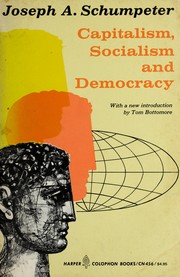 Citation
Capitalism, Socialism and Democracy
Joseph Schumpeter
Referenced in discussions of creative destruction and returns on entrepreneurial capital versus pure wealth.
Medium relevanceExplore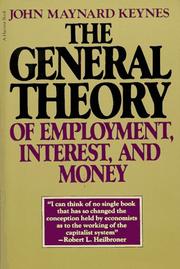 Citation
The General Theory of Employment, Interest and Money
John Maynard Keynes
Discussed regarding twentieth-century macroeconomic interventions and the euthanasia of the rentier.
Medium relevanceExplore Citation
An Essay on the Principle of Population
Thomas Robert Malthus
Examined alongside Ricardo as an early theorist concerned with demographic pressure and resource scarcity.
Medium relevanceExplore
Recommendations
 AI Recommendation
The Price of Inequality
Joseph E. Stiglitz
Argues that market distortions and political capture drive wealth disparities in contemporary economies.
High relevanceExplore AI Recommendation
The Hidden Wealth of Nations
Gabriel Zucman
Investigates offshore tax havens, providing direct empirical support for Piketty's global wealth tax proposal.
High relevanceExplore AI Recommendation
Capital and Ideology
Thomas Piketty
Sequel extending the economic analysis of wealth divergence into political and ideological history.
High relevanceExplore AI Recommendation
Global Inequality: A New Approach for the Age of Globalization
Branko Milanovic
Analyzes worldwide income distributions, complementing Piketty's national wealth concentration focus.
High relevanceExplore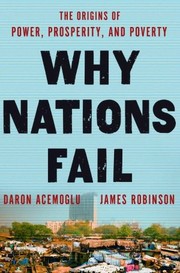 AI Recommendation
Why Nations Fail
Daron Acemoglu and James A. Robinson
Focuses on inclusive political institutions rather than capital rates of return as the primary driver of prosperity.
Medium relevanceExplore AI Recommendation
The Great Leveler
Walter Scheidel
Argues that historical reductions in inequality have predominantly resulted from violent shocks and catastrophe.
Medium relevanceExplore