
- Publish date
- 1987
- Publisher
- Sphere Books
- Description
Where to read & listen
This page may contain affiliate links. We may earn from qualifying purchases at no additional cost to you.
Book data & covers provided by Google Books and Open Library. Connections and summaries generated with Gemini AI.
Report incorrect dataBooks cited in Chaos: Making a New Science
Suggested by AI, not verified against the full text. Check the original book before using them as a source.
 Citation
Stability and Complexity in Model Ecosystems
Robert M. May
Classic text demonstrating how simple nonlinear biological models generate unexpectedly chaotic population dynamics.
High relevanceExplore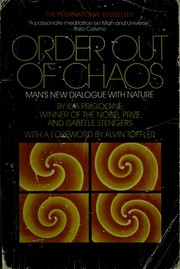 Citation
Order Out of Chaos
Ilya Prigogine and Isabelle Stengers
Influential work analyzing self-organization, non-equilibrium thermodynamics, and emergent macroscopic order.
High relevanceExplore Citation
The Structure of Scientific Revolutions
Thomas S. Kuhn
Foundational text on paradigm shifts, framing Gleick's narrative of the chaos revolution.
High relevanceExplore Citation
The Geometry of Biological Time
Arthur T. Winfree
Key biological study exploring non-linear rhythms and mathematical topologies in living organisms.
High relevanceExplore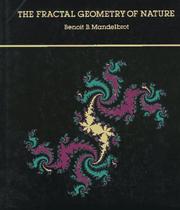 Citation
The Fractal Geometry of Nature
Benoit B. Mandelbrot
Seminal treatise establishing fractal geometry, extensively detailed in Gleick's chapter on Mandelbrot.
High relevanceExplore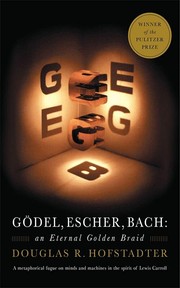 Citation
Gödel, Escher, Bach: An Eternal Golden Braid
Douglas R. Hofstadter
Influential work exploring recursion and strange loops, closely linked to early chaos concepts.
Medium relevanceExplore Citation
Cybernetics: Or Control and Communication in the Animal and the Machine
Norbert Wiener
Foundational work on feedback mechanisms that laid groundwork for modern dynamical systems theory.
Medium relevanceExplore- Citation
Dynamics: The Geometry of Behavior
Ralph H. Abraham and Christopher D. Shaw
Visual guide that helped popularize geometric intuition in nonlinear dynamical systems.
Medium relevanceExplore - Citation
On Growth and Form
D'Arcy Wentworth Thompson
Classic study of biological morphogenesis that foreshadowed geometric approaches to natural forms.
Medium relevanceExplore  Citation
Structural Stability and Morphogenesis
René Thom
Pioneering mathematical text introducing catastrophe theory and dynamical systems topology.
Medium relevanceExplore
Recommendations
- AI Recommendation
The Essence of Chaos
Edward Lorenz
Lorenz's own accessible exposition of chaotic dynamics, strange attractors, and weather prediction.
High relevanceExplore 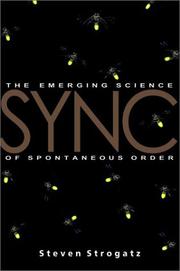 AI Recommendation
Sync: How Order Emerges from Chaos in the Universe, Nature, and Daily Life
Steven Strogatz
Explores nonlinear synchronization and collective self-organization in nature and mathematics.
High relevanceExplore AI Recommendation
Chance and Chaos
David Ruelle
A founder of strange attractors provides a philosophical overview of chaos and turbulence.
High relevanceExplore AI Recommendation
Complexity: The Emerging Science at the Edge of Order and Chaos
M. Mitchell Waldrop
Narrates the rise of the Santa Fe Institute and complexity science following chaos theory.
High relevanceExplore- AI Recommendation
The Quark and the Jaguar: Adventures in the Simple and the Complex
Murray Gell-Mann
Nobel laureate connects simple fundamental physical laws to the behavior of complex systems.
Medium relevanceExplore - AI Recommendation
At Home in the Universe: The Search for the Laws of Self-Organization and Complexity
Stuart Kauffman
Investigates self-organization and complex adaptive systems arising at the edge of chaos.
Medium relevanceExplore