- Publish date
- 1848
- Publisher
- The Penguin Press
- Description
Where to read & listen
This page may contain affiliate links. We may earn from qualifying purchases at no additional cost to you.
Book data & covers provided by Google Books and Open Library. Connections and summaries generated with Gemini AI.
Report incorrect dataBooks cited in Command and Control
Suggested by AI, not verified against the full text. Check the original book before using them as a source.
 Citation
The Logic of Accidental Nuclear War
Bruce G. Blair
Details critical vulnerabilities in early warning and command systems cited extensively by Schlosser.
High relevanceExplore- Citation
Normal Accidents: Living with High-Risk Technologies
Charles Perrow
Supplies the theoretical framework on tightly coupled, complex systems prone to inevitable technological failures.
High relevanceExplore  Citation
Managing Nuclear Operations
Ashton B. Carter, John D. Steinbruner, and Charles A. Zraket
Serves as an authoritative technical source on Cold War nuclear operational procedures and communications.
High relevanceExplore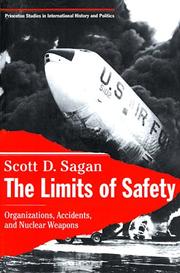 Citation
The Limits of Safety
Scott D. Sagan
Provides the foundational organization theory on nuclear weapon accidents heavily referenced throughout the book.
High relevanceExplore Citation
The Evolution of Nuclear Strategy
Lawrence Freedman
Provides strategic context for shifts in American nuclear targeting doctrine across presidential administrations.
Medium relevanceExplore Citation
Strategic Command and Control: Redefining the Nuclear Threat
Bruce G. Blair
Cited regarding the destabilizing risks inherent in launch-on-warning strategic postures.
Medium relevanceExplore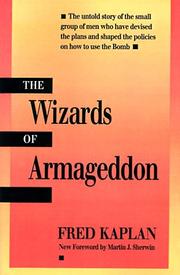 Citation
The Wizards of Armageddon
Fred Kaplan
Informs the historical background on RAND Corporation strategists and the formulation of nuclear war plans.
Medium relevanceExplore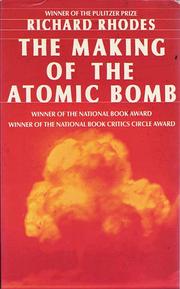 Citation
The Making of the Atomic Bomb
Richard Rhodes
Provides foundational historical context on Manhattan Project safety protocols and nuclear fission discoveries.
Medium relevanceExplore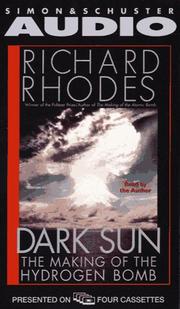 Citation
Dark Sun: The Making of the Hydrogen Bomb
Richard Rhodes
Referenced for the technical history of thermonuclear weapon design and early handling protocols.
Medium relevanceExplore- Citation
Atomic Audit: The Costs and Consequences of U.S. Nuclear Weapons Since 1940
Stephen I. Schwartz
Supplies data on the massive financial scale and maintenance infrastructure of the arsenal.
Medium relevanceExplore 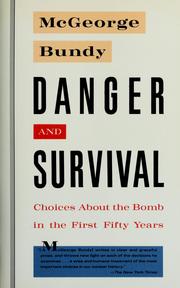 Citation
Danger and Survival: Choices About the Bomb in the First Fifty Years
McGeorge Bundy
Informs analysis of presidential decision-making and crisis management during Cold War atomic alerts.
Medium relevanceExplore Citation
Trinity's Children: Living Along America's Nuclear Highway
Tad Bartimus and Scott McCartney
Cited for operational perspectives and daily routines of crews serving at missile silos.
Medium relevanceExplore
There may be more citations. We show up to 12 per book to keep the list manageable.
Recommendations
 AI Recommendation
The Dead Hand: The Untold Story of the Cold War Arms Race and Its Dangerous Legacy
David E. Hoffman
Investigates Soviet nuclear command vulnerabilities, automated retaliation mechanisms, and arms race perils.
High relevanceExplore AI Recommendation
The Doomsday Machine: Confessions of a Nuclear War Planner
Daniel Ellsberg
Provides an insider account of hair-trigger nuclear command systems and systemic operational dangers.
High relevanceExplore AI Recommendation
Nuclear War: A Scenario
Annie Jacobsen
Dramatizes the rapid escalation and command breakdown inherent in modern launch-on-warning protocols.
Medium relevanceExplore- AI Recommendation
Raven Rock: The Story of the U.S. Government's Secret Plan to Save Itself
Garrett M. Graff
Explores the continuity-of-government bunkers designed to maintain command and control during nuclear war.
Medium relevanceExplore 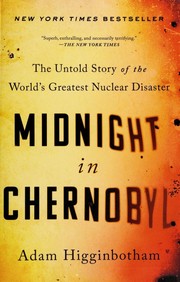 AI Recommendation
Midnight in Chernobyl
Adam Higginbotham
Analyzes institutional complacency, system flaws, and human error in catastrophic nuclear technology failures.
Medium relevanceExplore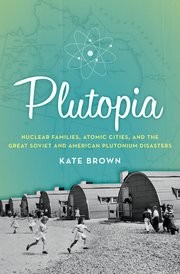 AI Recommendation
Plutopia
Kate Brown
Examines the hidden systemic and environmental risks of plutonium production in the Cold War.
Medium relevanceExplore