
Consciousness Explained
Daniel C. DennettEN
- Publish date
- 1991
- Publisher
- Little, Brown and Co.
- Description
Where to read & listen
This page may contain affiliate links. We may earn from qualifying purchases at no additional cost to you.
Book data & covers provided by Google Books and Open Library. Connections and summaries generated with Gemini AI.
Report incorrect dataBooks mentioned & referenced in Consciousness Explained
Suggested by AI, not verified against the full text. Check the original book before using them as a source.
 Citation
The Origin of Consciousness in the Breakdown of the Bicameral Mind
Julian Jaynes
Dennett engages with Jaynes' provocative thesis to discuss how language culturally installed the software of conscious self-monitoring.
High relevanceExplore Citation
The Society of Mind
Marvin Minsky
Dennett draws on Minsky's framework of decentralized mental agents to support his Multiple Drafts model.
High relevanceExplore Citation
Meditations on First Philosophy
René Descartes
Dennett critiques Cartesian dualism and the enduring myth of the 'Cartesian Theater' where consciousness supposedly comes together.
High relevanceExplore Citation
The Selfish Gene
Richard Dawkins
Dennett utilizes the concept of memes to explain human consciousness as a cultural innovation running on biological hardware.
High relevanceExplore Citation
Minds, Brains and Science
John Searle
Dennett directly challenges Searle's biological naturalism and the validity of the Chinese Room thought experiment.
High relevanceExplore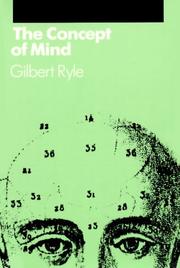 Citation
The Concept of Mind
Gilbert Ryle
Dennett builds upon Ryle's foundational critique of the 'ghost in the machine' to dismantle internalist views of mind.
High relevanceExplore Citation
Mortal Questions
Thomas Nagel
Dennett disputes Nagel's essay on bat consciousness and rejects the premise of ineffable, subjective qualia.
High relevanceExplore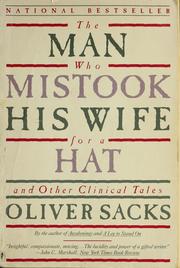 Citation
The Man Who Mistook His Wife for a Hat
Oliver Sacks
Dennett uses neurological clinical cases to illustrate how specific cognitive breakdowns undermine intuitive models of consciousness.
Medium relevanceExplore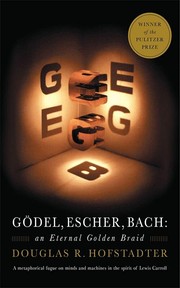 Citation
Gödel, Escher, Bach: An Eternal Golden Braid
Douglas Hofstadter
Dennett incorporates Hofstadter's concepts of self-referential strange loops to describe how a sense of self emerges.
Medium relevanceExplore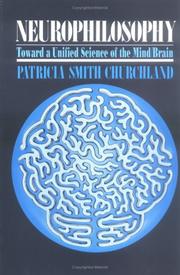 Citation
Neurophilosophy: Toward a Unified Science of the Mind-Brain
Patricia S. Churchland
Dennett aligns his methodology with Churchland's integration of empirical neuroscience and philosophy of mind.
Medium relevanceExplore Citation
The Principles of Psychology
William James
Dennett references James' classical description of the stream of consciousness while arguing against a single, unified stream.
Medium relevanceExplore Citation
The Problem of Consciousness
Colin McGinn
Dennett argues against McGinn's 'mysterian' view that consciousness is fundamentally beyond human cognitive comprehension.
Medium relevanceExplore
There may be more citations. We show up to 12 per book to keep the list manageable.
Recommendations
 AI Recommendation
Consciousness and the Brain: Deciphering How the Brain Codes Our Thoughts
Stanislas Dehaene
Provides modern empirical neuroscience demonstrating global workspace dynamics that closely match Dennett's conceptual predictions.
High relevanceExplore AI Recommendation
Darwin's Dangerous Idea: Evolution and the Meanings of Life
Daniel C. Dennett
Dennett expands the algorithmic, evolutionary foundations that underpin his materialist account of mind and culture.
High relevanceExplore AI Recommendation
The Conscious Mind: In Search of a Fundamental Theory
David J. Chalmers
Formulates the 'hard problem' of consciousness, serving as the definitive modern philosophical rebuttal to Dennett's functionalism.
High relevanceExplore AI Recommendation
I Am a Strange Loop
Douglas Hofstadter
Expounds on the computational and symbolic nature of the 'I' as an emergent illusion generated by recursive feedback loops.
Medium relevanceExplore AI Recommendation
Supersizing the Mind: Embodiment, Action, and Cognitive Extension
Andy Clark
Extends functionalist views of cognition into the environment, harmonizing with Dennett's externalist perspectives on mental tools.
Medium relevanceExplore AI Recommendation
Descartes' Error: Emotion, Reason, and the Human Brain
Antonio Damasio
Explores the neurobiology of the embodied self and challenges classical dualist conceptions of mind and body.
Medium relevanceExplore