
Critique of Practical Reason
Immanuel KantEN
- Publish date
- 1781
- Publisher
- Taiwan xue sheng shu ju
- Description
Where to read & listen
This page may contain affiliate links. We may earn from qualifying purchases at no additional cost to you.
Book data & covers provided by Google Books and Open Library. Connections and summaries generated with Gemini AI.
Report incorrect dataBooks mentioned & referenced in Critique of Practical Reason
Suggested by AI, not verified against the full text. Check the original book before using them as a source.
 Citation
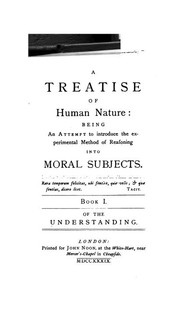
A Treatise of Human Nature
David Hume
Kant responds to Hume's arguments concerning causality and the impossibility of reason motivating action alone.
High relevanceExplore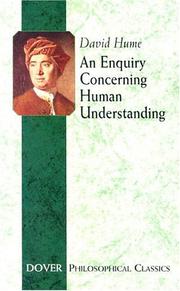 Citation
An Enquiry Concerning the Principles of Morals
David Hume
Kant directly confronts Hume's skepticism regarding pure practical reason and empirical sentiment-based ethics.
High relevanceExplore Citation
Groundwork of the Metaphysics of Morals
Immanuel Kant
Kant references this earlier text to develop further his formulation of the categorical imperative.
High relevanceExplore- Citation
Nicomachean Ethics
Aristotle
Kant contrasts his deontological approach with traditional eudaemonism that equates virtue with happiness.
High relevanceExplore  Citation
Emile, or On Education
Jean-Jacques Rousseau
Kant was profoundly influenced by Rousseau's moral egalitarianism and concept of human dignity.
High relevanceExplore- Citation
Critique of Pure Reason
Immanuel Kant
Kant establishes the epistemological foundation and limitations of theoretical reason prerequisite for his moral philosophy.
High relevanceExplore - Citation
Letters from a Stoic
Seneca
Kant examines Stoic definitions of duty and the suppression of inclination in achieving virtue.
Medium relevanceExplore  Citation
The Republic
Plato
Kant reflects on the Platonic conception of ideas and the intelligible realm foundational to moral law.
Medium relevanceExplore Citation
Theodicy
Gottfried Wilhelm Leibniz
Kant evaluates Leibniz's rationalist determinism and philosophical defense of divine justice and human freedom.
Medium relevanceExplore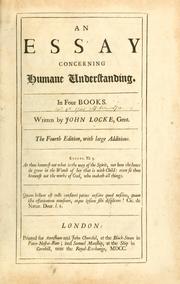 Citation
An Essay Concerning Human Understanding
John Locke
Kant challenges empiricist accounts of moral motivation derived from sensations of pleasure and pain.
Medium relevanceExplore Citation
De Finibus Bonorum et Malorum
Cicero
Kant engages with classical Stoic and Epicurean debates concerning the highest good and virtue.
Medium relevanceExplore Citation
Ethics
Baruch Spinoza
Kant criticizes Spinoza's determinism and theological fatalism as destructive to moral freedom and autonomy.
Medium relevanceExplore
There may be more citations. We show up to 12 per book to keep the list manageable.
Recommendations
 AI Recommendation
On the Basis of Morality
Arthur Schopenhauer
Schopenhauer delivers an extensive critique of Kant's categorical imperative and deontological framework.
High relevanceExplore- AI Recommendation
The Metaphysics of Morals
Immanuel Kant
Kant applies the practical moral principles developed in the second Critique to concrete human duties.
High relevanceExplore  AI Recommendation
Religion within the Boundaries of Mere Reason
Immanuel Kant
Kant explores the moral postulate of God and radical evil grounded in practical reason.
High relevanceExplore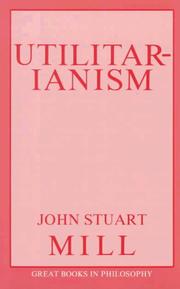 AI Recommendation
Utilitarianism
John Stuart Mill
Mill articulates the consequentialist rival to Kantian deontological ethics based on happiness.
High relevanceExplore- AI Recommendation
Elements of the Philosophy of Right
G. W. F. Hegel
Hegel critiques Kantian morality as abstract formalism and develops ethical life within social institutions.
High relevanceExplore  AI Recommendation
After Virtue
Alasdair MacIntyre
MacIntyre diagnoses the perceived failure of Kant's Enlightenment project to justify universal moral rules.
Medium relevanceExplore