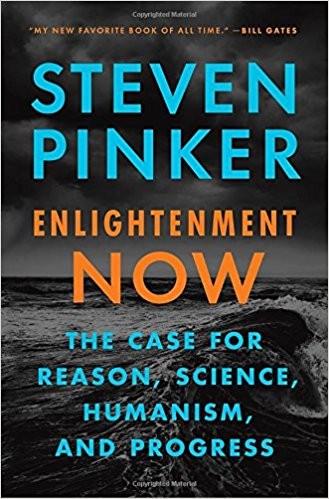
Enlightenment Now
Steven PinkerEN
- Publish date
- 2018
- Publisher
- Penguin Books, Limited
- Description
Where to read & listen
This page may contain affiliate links. We may earn from qualifying purchases at no additional cost to you.
Book data & covers provided by Google Books and Open Library. Connections and summaries generated with Gemini AI.
Report incorrect dataBooks mentioned & referenced in Enlightenment Now
Suggested by AI, not verified against the full text. Check the original book before using them as a source.
 Citation
The Beginning of Infinity: Explanations That Transform the World
David Deutsch
Cited extensively for its philosophical framework that problems are inevitable but solvable through science and explanation.
High relevanceExplore Citation
Thinking, Fast and Slow
Daniel Kahneman
Cited to explain cognitive biases, such as the availability heuristic, that predispose people toward unwarranted pessimism.
High relevanceExplore Citation
The Better Angels of Our Nature: Why Violence Has Declined
Steven Pinker
Referenced as the direct prequel laying the quantitative foundation for the historical decline of violence.
High relevanceExplore Citation
The Great Escape: Health, Wealth, and the Origins of Inequality
Angus Deaton
Referenced for historical and economic data tracing humanity's dramatic escape from deprivation and disease.
High relevanceExplore Citation
The Population Bomb
Paul R. Ehrlich
Critiqued as a prominent example of flawed, neo-Malthusian apocalyptic predictions about global famine.
Medium relevanceExplore Citation
Superintelligence: Paths, Dangers, Strategies
Nick Bostrom
Critiqued for promoting what Pinker considers overblown, quasi-religious fears of existential risk from artificial intelligence.
Medium relevanceExplore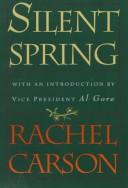 Citation
Silent Spring
Rachel Carson
Discussed as both an important catalyst for environmental awareness and a contributor to anti-technology eco-pessimism.
Medium relevanceExplore Citation
The Ultimate Resource
Julian Simon
Referenced for the insight that human knowledge and ingenuity are the ultimate limits to physical resources.
Medium relevanceExplore Citation
The Rational Optimist: How Prosperity Evolves
Matt Ridley
Cited regarding how exchange, specialization, and innovation have fueled continuous material improvement.
Medium relevanceExplore Citation
On the Genealogy of Morality
Friedrich Nietzsche
Critiqued as a primary intellectual source for the Counter-Enlightenment rejection of humanism and egalitarianism.
Medium relevanceExplore Citation
The Moral Arc: How Science and Reason Lead Us Toward Truth, Justice, and Freedom
Michael Shermer
Cited in support of the argument that scientific thinking drives moral progress and the expansion of human rights.
Medium relevanceExplore Citation
The Idea of Decline in Western History
Arthur Herman
Referenced to analyze the persistent intellectual tradition of cultural and civilizational declinism.
Medium relevanceExplore
There may be more citations. We show up to 12 per book to keep the list manageable.