- Publish date
- 2005
- Publisher
- De Bezige Bij
- Description
Where to read & listen
This page may contain affiliate links. We may earn from qualifying purchases at no additional cost to you.
Book data & covers provided by Google Books and Open Library. Connections and summaries generated with Gemini AI.
Report incorrect dataBooks cited in Freakonomics
Suggested by AI, not verified against the full text. Check the original book before using them as a source.
 Citation
More Guns, Less Crime
John R. Lott Jr.
Directly analyzed and disputed regarding the causes behind the 1990s drop in violent crime.
High relevanceExplore- Citation
The Economic Approach to Human Behavior
Gary S. Becker
Serves as foundational intellectual grounding for applying economic analysis to crime and social behaviors.
High relevanceExplore - Citation
The Tipping Point
Malcolm Gladwell
Critiqued concerning the broken windows theory as an explanation for falling crime rates.
High relevanceExplore  Citation
The Theory of Moral Sentiments
Adam Smith
Cited to discuss innate human morality and honesty in the context of Paul Feldman's bagel business.
High relevanceExplore- Citation
How to Lie with Statistics
Darrell Huff
Referenced as a classic guide on the misuse and misinterpretation of statistical correlation.
Medium relevanceExplore  Citation
The Theory of the Leisure Class
Thorstein Veblen
Referenced in the analysis of baby naming patterns and social status signaling.
Medium relevanceExplore- Citation
Micromotives and Macrobehavior
Thomas C. Schelling
Influences the discussion of how individual incentives aggregate into broader societal patterns.
Medium relevanceExplore - Citation
The Wealth of Nations
Adam Smith
Cited as the traditional baseline for economic incentives and free market transactions.
Medium relevanceExplore
Recommendations
 AI Recommendation
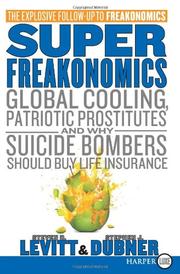
SuperFreakonomics
Steven D. Levitt and Stephen J. Dubner
Direct sequel expanding Levitt's statistical approach to global cooling, prostitution, and altruism.
High relevanceExplore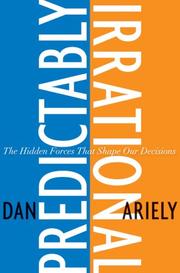 AI Recommendation
Predictably Irrational
Dan Ariely
Examines how human choices systematically diverge from conventional rational economic theory.
High relevanceExplore AI Recommendation
The Undercover Economist
Tim Harford
Shares the premise of using microeconomic tools to demystify everyday institutions and behaviors.
High relevanceExplore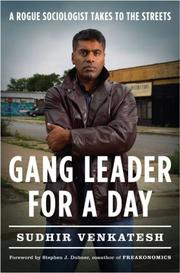 AI Recommendation
Gang Leader for a Day
Sudhir Venkatesh
Full-length memoir based on the street-level gang research highlighted in Freakonomics.
High relevanceExplore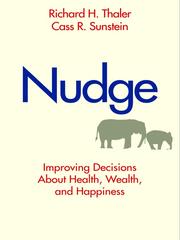 AI Recommendation
Nudge
Richard H. Thaler and Cass R. Sunstein
Explores how subtle changes in incentive structures influence public and private decision-making.
Medium relevanceExplore AI Recommendation
Thinking, Fast and Slow
Daniel Kahneman
Provides cognitive psychology mechanisms underlying the behavioral anomalies and biases Levitt investigates.
Medium relevanceExplore