
How the Mind Works
Steven PinkerEN
- Publish date
- 1997
- Publisher
- Ediciones Destino
- Description
Where to read & listen
This page may contain affiliate links. We may earn from qualifying purchases at no additional cost to you.
Book data & covers provided by Google Books and Open Library. Connections and summaries generated with Gemini AI.
Report incorrect dataBooks mentioned & referenced in How the Mind Works
Suggested by AI, not verified against the full text. Check the original book before using them as a source.
 Citation
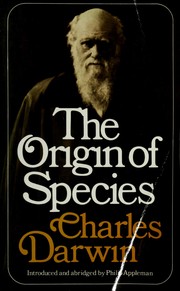
On the Origin of Species
Charles Darwin
Cited as the fundamental scientific basis for the theory of natural selection shaping all biological organs, including the mind.
High relevanceExplore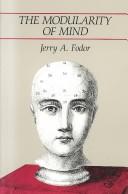 Citation
The Modularity of Mind
Jerry A. Fodor
Informs Pinker's view of specialized cognitive modules, though Pinker departs from Fodor's skepticism regarding central cognitive processes.
High relevanceExplore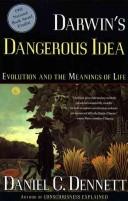 Citation
Darwin's Dangerous Idea
Daniel C. Dennett
Referenced to defend adaptationism and the concept of reverse-engineering biological designs.
High relevanceExplore Citation
The Evolution of Human Sexuality
Donald Symons
Forms the primary theoretical backbone for Pinker's chapters on mating, sexual desires, and gender differences.
High relevanceExplore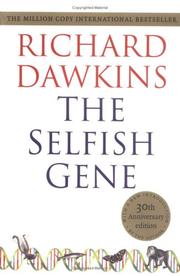 Citation
The Selfish Gene
Richard Dawkins
Cited extensively to ground psychological mechanisms in gene-level natural selection.
High relevanceExplore Citation
The Adapted Mind
Jerome H. Barkow, Leda Cosmides, and John Tooby
Provides the foundational evolutionary psychology framework Pinker relies on to explain mental adaptations.
High relevanceExplore Citation
Vision
David Marr
Supplies the computational and reverse-engineering approach to understanding how the human visual system processes information.
High relevanceExplore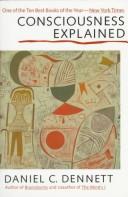 Citation
Consciousness Explained
Daniel C. Dennett
Discussed in relation to dismantling the 'Cartesian Theater' and computational approaches to sentience.
Medium relevanceExplore Citation
Sociobiology: The New Synthesis
Edward O. Wilson
Cited as an important precursor to evolutionary psychology and the study of human social behaviors.
Medium relevanceExplore Citation
The Language Instinct
Steven Pinker
Referenced by Pinker as his earlier work that demonstrated how one specific mental module operates.
Medium relevanceExplore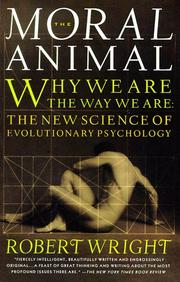 Citation
The Moral Animal
Robert Wright
Referenced as an accessible synthesis of the evolutionary logic underlying human emotions and social relations.
Medium relevanceExplore Citation
The Blind Watchmaker
Richard Dawkins
Cited to argue that complex functional designs in organs like the brain can only arise via natural selection.
Medium relevanceExplore
There may be more citations. We show up to 12 per book to keep the list manageable.
Recommendations
 AI Recommendation
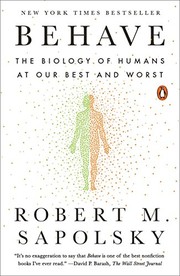
Behave: The Biology of Humans at Our Best and Worst
Robert M. Sapolsky
Synthesizes neurobiology, evolutionary theory, and psychology to explain human decision-making and social behavior.
High relevanceExplore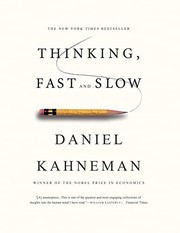 AI Recommendation
Thinking, Fast and Slow
Daniel Kahneman
Explores the heuristics, biases, and dual-system cognitive architecture central to modern computational psychology.
High relevanceExplore AI Recommendation
The Blank Slate
Steven Pinker
Pinker's direct thematic follow-up addressing the moral, political, and emotional resistance to the evolutionary view of human nature.
High relevanceExplore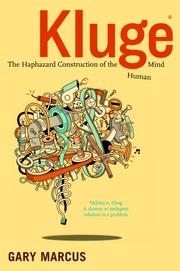 AI Recommendation
Kluge: The Haphazard Construction of the Human Mind
Gary Marcus
Offers a complementary, engineering-focused look at the evolutionary compromises and imperfections of cognitive architecture.
Medium relevanceExplore AI Recommendation
The Righteous Mind
Jonathan Haidt
Examines moral intuitions through an evolutionary lens, expanding on Pinker's discussion of moral psychology.
Medium relevanceExplore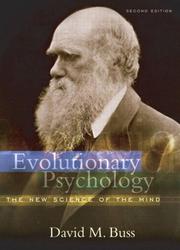 AI Recommendation
Evolutionary Psychology: The New Science of the Mind
David M. Buss
Comprehensive textbook covering the empirical findings and theoretical developments in the evolutionary study of the mind.
Medium relevanceExplore