- Publish date
- 2019
- Publisher
- HighBridge Audio
- Description
Where to read & listen
This page may contain affiliate links. We may earn from qualifying purchases at no additional cost to you.
Book data & covers provided by Google Books and Open Library. Connections and summaries generated with Gemini AI.
Report incorrect dataBooks cited in How to Do Nothing: Resisting the Attention Economy
Suggested by AI, not verified against the full text. Check the original book before using them as a source.
- Citation
24/7: Late Capitalism and the Ends of Sleep
Jonathan Crary
Analyzes how contemporary capitalism seeks to eliminate non-productive time and relentlessly colonize human attention.
High relevanceExplore  Citation
The World Beyond Your Head: On Becoming an Individual in an Age of Distraction
Matthew B. Crawford
Draws on Crawford's concept of the attentional commons and the loss of shared physical reality.
High relevanceExplore Citation
Zhuangzi
Zhuang Zhou
Provides the foundational allegory of the useless tree whose lack of commercial utility ensures its survival.
High relevanceExplore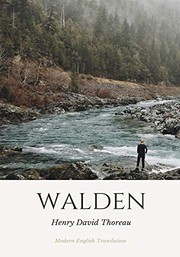 Citation
Walden
Henry David Thoreau
Examined both as a model of intentional withdrawal and as an individualistic escape lacking collective responsibility.
High relevanceExplore Citation
Stand Out of Our Light: Freedom and Resistance in the Attention Economy
James Williams
Cited regarding how persuasive technology undermines human agency, deep reflection, and political will.
Medium relevanceExplore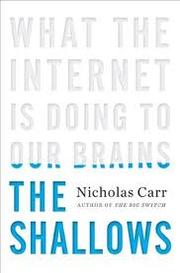 Citation
The Shallows: What the Internet Is Doing to Our Brains
Nicholas Carr
Referenced to discuss how constant internet connectivity fragments cognition and deep contemplation.
Medium relevanceExplore
Recommendations
 AI Recommendation
Saving Time: Discovering a Life Beyond the Clock
Jenny Odell
The author's direct follow-up expanding the critique from digital attention to the social construct of time.
High relevanceExplore AI Recommendation
Four Thousand Weeks: Time Management for Mortals
Oliver Burkeman
Critiques the instrumentalization of life and offers a companion perspective on rejecting modern productivity guilt.
Medium relevanceExplore AI Recommendation
The Mushroom at the End of the World
Anna Lowenhaupt Tsing
Shares a core methodology of deep observation, ecological entanglement, and survival outside capitalist progress.
Medium relevanceExplore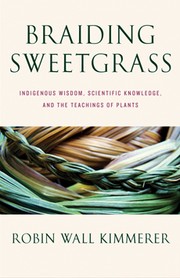 AI Recommendation
Braiding Sweetgrass
Robin Wall Kimmerer
Shares Odell's emphasis on bioregional awareness, reciprocal care for nature, and ecological attention.
Medium relevanceExplore