
Lords of Finance
Liaquat AhamedEN
- Publish date
- 2009
- Publisher
- Penguin USA, Inc.
- Description
Where to read & listen
This page may contain affiliate links. We may earn from qualifying purchases at no additional cost to you.
Book data & covers provided by Google Books and Open Library. Connections and summaries generated with Gemini AI.
Report incorrect dataBooks mentioned & referenced in Lords of Finance
Suggested by AI, not verified against the full text. Check the original book before using them as a source.
 Citation
My First Seventy-Six Years: The Autobiography of Hjalmar Schacht
Hjalmar Schacht
Referenced for Schacht's own recollections of stabilizing the Weimar mark and navigating interwar reparations diplomacy.
High relevanceExplore Citation
Lord Norman
Henry Clay
Cited for detailed accounts of the eccentric personality, health struggles, and policies of Bank of England governor Montagu Norman.
High relevanceExplore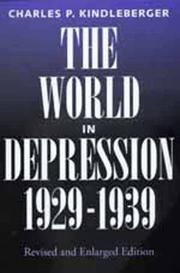 Citation
The World in Depression, 1929–1939
Charles P. Kindleberger
Used as a major conceptual framework for explaining how a lack of global financial leadership worsened the crisis.
High relevanceExplore- Citation
Benjamin Strong, Central Banker
Lester V. Chandler
Serves as an essential biographical source on the life, decisions, and untimely death of the Federal Reserve Bank of New York's governor.
High relevanceExplore - Citation
A Monetary History of the United States, 1867–1960
Milton Friedman and Anna Jacobson Schwartz
Referenced regarding the critical monetary policy missteps of the Federal Reserve during the onset of the Great Depression.
High relevanceExplore 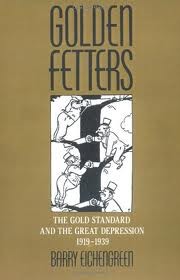 Citation
Golden Fetters: The Gold Standard and the Great Depression, 1919–1939
Barry Eichengreen
Draws heavily upon its thesis that adherence to the interwar gold standard exacerbated and transmitted the Great Depression globally.
High relevanceExplore Citation
The Economic Consequences of the Peace
John Maynard Keynes
Cited extensively to document Keynes's early warnings about the catastrophic economic burden of German reparations.
High relevanceExplore Citation
Essays in Persuasion
John Maynard Keynes
Cited for Keynes's contemporary public critiques of Winston Churchill's decision to return Britain to the gold standard in 1925.
Medium relevanceExplore Citation
The Carthaginian Peace, or the Economic Consequences of Mr. Keynes
Étienne Mantoux
Referenced as a classic French critique challenging Keynes's arguments regarding Germany's capacity to pay war reparations.
Medium relevanceExplore Citation
The General Theory of Employment, Interest and Money
John Maynard Keynes
Mentioned as the theoretical culmination of Keynes's dissatisfaction with orthodox central banking and deflationary policies.
Medium relevanceExplore Citation
The Memoirs of Herbert Hoover
Herbert Hoover
Cited regarding Hoover's interactions with Federal Reserve officials and his defense of his administration's economic responses.
Medium relevanceExplore Citation
The Great Crash, 1929
John Kenneth Galbraith
Cited in the narrative recounting the speculative mania and subsequent collapse of Wall Street in late 1929.
Medium relevanceExplore
There may be more citations. We show up to 12 per book to keep the list manageable.
Recommendations
 AI Recommendation
Essays on the Great Depression
Ben S. Bernanke
Offers deep analytical insights into the macroeconomic mechanisms and banking crises explored narratively in Ahamed's book.
High relevanceExplore AI Recommendation
Manias, Panics, and Crashes: A History of Financial Crises
Charles P. Kindleberger
Provides a comprehensive historical typology of speculative bubbles and systemic banking panics across centuries.
High relevanceExplore AI Recommendation
Hall of Mirrors: The Great Depression, the Great Recession, and the Uses—and Misuses—of History
Barry Eichengreen
Compares the financial crisis and policy errors of the 1930s directly with those of 2008.
High relevanceExplore- AI Recommendation
The Courage to Act: A Memoir of a Crisis and Its Aftermath
Ben S. Bernanke
Chronicles modern central banking leadership during the 2008 crisis, informed by lessons learned from the 1929 collapse.
Medium relevanceExplore 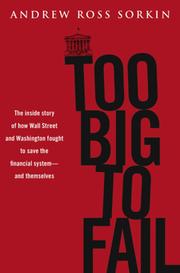 AI Recommendation
Too Big to Fail
Andrew Ross Sorkin
Provides a character-driven, behind-the-scenes account of central bankers and financiers confronting the 2008 panic.
Medium relevanceExplore- AI Recommendation
This Time Is Different: Eight Centuries of Financial Folly
Carmen M. Reinhart and Kenneth S. Rogoff
Presents rigorous empirical data showing the cyclical and recurring nature of sovereign debt and banking collapses.
Medium relevanceExplore