
Manias, Panics, and Crashes
Charles P. KindlebergerEN
- Publish date
- 1978
- Publisher
- Papermac
- Description
Where to read & listen
This page may contain affiliate links. We may earn from qualifying purchases at no additional cost to you.
Book data & covers provided by Google Books and Open Library. Connections and summaries generated with Gemini AI.
Report incorrect dataBooks mentioned & referenced in Manias, Panics, and Crashes
Suggested by AI, not verified against the full text. Check the original book before using them as a source.
 Citation
Extraordinary Popular Delusions and the Madness of Crowds
Charles Mackay
Kindleberger examines Mackay's classic accounts of historical speculative episodes such as Tulip Mania and the South Sea Bubble.
High relevanceExplore- Citation
A Monetary History of the United States, 1867–1960
Milton Friedman and Anna Jacobson Schwartz
Kindleberger engages with and frequently challenges their strictly monetarist interpretation of bank runs and historical crises.
High relevanceExplore  Citation
John Maynard Keynes
Hyman P. Minsky
Kindleberger explicitly adopts Minsky's model of financial instability as the primary conceptual framework for explaining booms and busts.
High relevanceExplore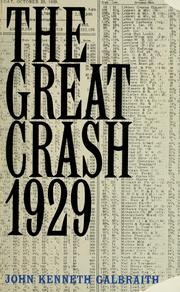 Citation
The Great Crash, 1929
John Kenneth Galbraith
Kindleberger cites Galbraith's narrative to illustrate the psychology of speculation and fraudulent activities that surfaced during the 1929 collapse.
High relevanceExplore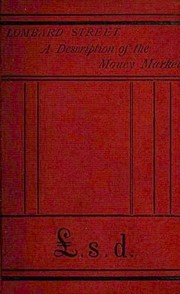 Citation
Lombard Street: A Description of the Money Market
Walter Bagehot
Kindleberger relies heavily on Bagehot's classical formulation of the lender of last resort rule during financial panics.
High relevanceExplore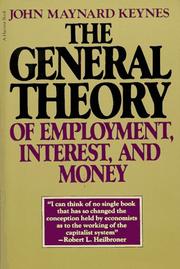 Citation
The General Theory of Employment, Interest, and Money
John Maynard Keynes
Kindleberger draws on Keynes's insights regarding animal spirits, liquidity preference, and market psychology during crises.
Medium relevanceExplore Citation
Business Cycles
Joseph Schumpeter
Kindleberger references Schumpeter's analysis of technological innovations creating the initial displacement that sparks speculative booms.
Medium relevanceExplore Citation
The South Sea Bubble
John Carswell
Kindleberger references Carswell's detailed historical account to analyze the structural dynamics of the 1720 British crisis.
Medium relevanceExplore- Citation
Booms and Depressions
Irving Fisher
Kindleberger discusses Fisher's debt-deflation theory to explain how distressed selling worsens macroeconomic downturns.
Medium relevanceExplore  Citation
Financial Crises and Periods of Industrial and Commercial Depression
Theodore E. Burton
Kindleberger examines Burton's early twentieth-century comparative study of periodic panics in major Western economies.
Medium relevanceExplore Citation
An Inquiry into the Nature and Causes of the Wealth of Nations
Adam Smith
Kindleberger cites Smith's reflections on eighteenth-century banking instabilities and the collapse of the Ayr Bank.
Medium relevanceExplore Citation
Business Annals
Willard Long Thorp
Kindleberger utilizes Thorp's extensive chronological records of historical business cycles to map out the timing of panics.
Medium relevanceExplore
There may be more citations. We show up to 12 per book to keep the list manageable.
Recommendations
 AI Recommendation
Devil Take the Hindmost: A History of Financial Speculation
Edward Chancellor
A detailed and engaging historical survey of speculative manias from the seventeenth century to the late twentieth century.
High relevanceExplore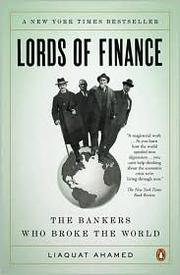 AI Recommendation
Lords of Finance: The Bankers Who Broke the World
Liaquat Ahamed
An examination of how central bankers' decisions in the interwar era precipitated and deepened the Great Depression.
High relevanceExplore- AI Recommendation
This Time Is Different: Eight Centuries of Financial Folly
Carmen M. Reinhart and Kenneth S. Rogoff
A comprehensive quantitative history of debt defaults, bank runs, and currency crashes across eight centuries that directly builds on Kindleberger's themes.
High relevanceExplore 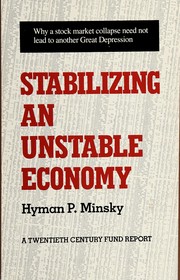 AI Recommendation
Stabilizing an Unstable Economy
Hyman P. Minsky
Minsky's full exposition of the Financial Instability Hypothesis that underpins the theoretical apparatus of Kindleberger's narrative.
High relevanceExplore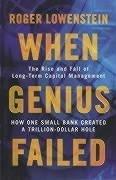 AI Recommendation
When Genius Failed: The Rise and Fall of Long-Term Capital Management
Roger Lowenstein
A modern case study of overleveraged speculation and systemic liquidity panic mirroring Kindleberger's historical models.
Medium relevanceExplore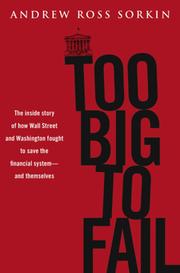 AI Recommendation
Too Big to Fail
Andrew Ross Sorkin
A gripping account of the 2008 financial crisis illustrating Kindleberger's concepts of panic, credit freeze, and lender of last resort interventions.
Medium relevanceExplore