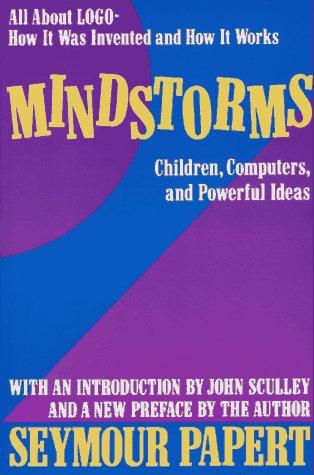
Mindstorms
Seymour PapertEN
- Publish date
- 1980
- Publisher
- Birkhauser Verlag
- Description
Where to read & listen
This page may contain affiliate links. We may earn from qualifying purchases at no additional cost to you.
Book data & covers provided by Google Books and Open Library. Connections and summaries generated with Gemini AI.
Report incorrect dataBooks mentioned & referenced in Mindstorms
Suggested by AI, not verified against the full text. Check the original book before using them as a source.
- Citation
The Child's Conception of Number
Jean Piaget
Referenced to illustrate how children spontaneously build mathematical concepts through interaction with their physical environment.
High relevanceExplore  Citation
The Child's Conception of the World
Jean Piaget
Provides the foundational model of developmental epistemology and constructivist learning that Papert adapts to computational environments.
High relevanceExplore Citation
How to Solve It
George Pólya
Cited as a primary influence on the book's emphasis on teaching heuristics and mathematical problem-solving skills.
High relevanceExplore- Citation
The Growth of Logical Thinking from Childhood to Adolescence
Bärbel Inhelder and Jean Piaget
Cited regarding the transition from concrete operational thinking to formal operational thought in adolescents.
Medium relevanceExplore - Citation
Perceptrons: An Introduction to Computational Geometry
Marvin Minsky and Seymour Papert
Papert references his earlier joint computational research to explain the nature of structured, algorithmic representations.
Medium relevanceExplore  Citation
Deschooling Society
Ivan Illich
Discussed as an important structural critique of institutional schooling and its alienation of learners.
Medium relevanceExplore Citation
Democracy and Education
John Dewey
Invoked as a philosophical antecedent emphasizing experiential education and active learning by doing.
Medium relevanceExplore- Citation
Human Problem Solving
Allen Newell and Herbert A. Simon
Referenced as a leading model in cognitive science and information-processing psychology for analyzing mental operations.
Medium relevanceExplore  Citation
Summerhill: A Radical Approach to Child Rearing
A. S. Neill
Mentioned when contrasting self-directed progressive education experiments with technology-enhanced learning environments.
Medium relevanceExplore Citation
Aspects of the Theory of Syntax
Noam Chomsky
Referenced when discussing natural language acquisition as an example of effortless, self-guided complex learning.
Medium relevanceExplore
Recommendations
 AI Recommendation
The Society of Mind
Marvin Minsky
A foundational cognitive science text by Papert's longtime collaborator presenting computational theories of human intelligence.
High relevanceExplore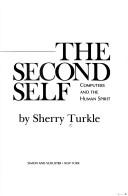 AI Recommendation
The Second Self: Computers and the Human Spirit
Sherry Turkle
Explores the psychological and cognitive impact of computers on children, drawing on research conducted alongside Papert at MIT.
High relevanceExplore AI Recommendation
Lifelong Kindergarten: Cultivating Creativity through Projects, Passion, Peers, and Purpose
Mitchel Resnick
Written by Papert's close collaborator, this book continues the constructionist legacy through the development of Scratch.
High relevanceExplore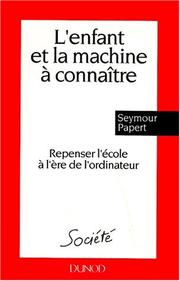 AI Recommendation
The Children's Machine: Rethinking School in the Age of the Computer
Seymour Papert
Papert's direct sequel examining how traditional schools resisted the profound educational shift proposed in Mindstorms.
High relevanceExplore- AI Recommendation
Connected Code: Why Children Need to Learn Programming
Yasmin B. Kafai and Quinn Burke
Analyzes the modern landscape of computational thinking and coding for children originating from Papert's Logo work.
Medium relevanceExplore - AI Recommendation
A New Culture of Learning: Cultivating the Imagination for a World of Constant Change
Douglas Thomas and John Seely Brown
Explores participatory, play-based digital environments that echo Papert's vision of organic, exploratory learning.
Medium relevanceExplore