- Publish date
- 2007
- Publisher
- Harcourt
- Description
Where to read & listen
This page may contain affiliate links. We may earn from qualifying purchases at no additional cost to you.
Book data & covers provided by Google Books and Open Library. Connections and summaries generated with Gemini AI.
Report incorrect dataBooks cited in Mistakes Were Made (But Not by Me)
Suggested by AI, not verified against the full text. Check the original book before using them as a source.
 Citation
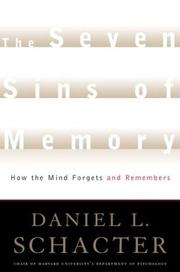
The Seven Sins of Memory
Daniel L. Schacter
Informs the analysis of memory distortions, highlighting how retrospective biases protect self-esteem.
High relevanceExplore Citation
The Myth of Repressed Memory
Elizabeth Loftus and Katherine Ketcham
Demonstrates how memory is malleable and routinely reconstructed to preserve self-justifying narratives.
High relevanceExplore Citation
The Social Animal
Elliot Aronson
Serves as a companion foundational text on social psychology co-authored by Aronson.
High relevanceExplore Citation
When Prophecy Fails
Leon Festinger, Henry Riecken, and Stanley Schachter
Exemplifies how individuals double down on disproven beliefs rather than admitting error.
High relevanceExplore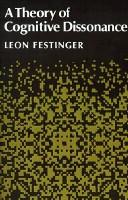 Citation
A Theory of Cognitive Dissonance
Leon Festinger
Provides the foundational psychological framework of cognitive dissonance that drives the book's core arguments.
High relevanceExplore Citation
Manufacturing Victims
Tana Dineen
Critiques psychotherapeutic practices that fabricate victimhood to protect clinical authority.
Medium relevanceExplore Citation
Blaming the Victim
William Ryan
Addresses the defensive psychological impulse to blame victims to sustain belief in a fair world.
Medium relevanceExplore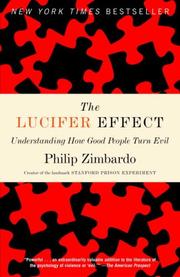 Citation
The Lucifer Effect
Philip Zimbardo
Analyzes situational pressures and the psychological rationalization of unethical behavior.
Medium relevanceExplore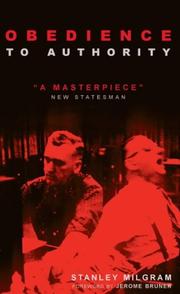 Citation
Obedience to Authority
Stanley Milgram
Explains how incremental steps lead ordinary people into justifying harmful compliance with authority.
Medium relevanceExplore Citation
Victims of Memory
Mark Pendergrast
Exposes the destructive impact of recovered memory therapy during the satanic panic phenomenon.
Medium relevanceExplore Citation
The Invisible Gorilla
Christopher Chabris and Daniel Simons
Details how selective perception and attentional blind spots fuel unearned cognitive confidence.
Medium relevanceExplore Citation
Blindspot: Hidden Biases of Good People
Mahzarin R. Banaji and Anthony G. Greenwald
Explores unconscious biases that individuals rationalize away to maintain a positive self-image.
Medium relevanceExplore
There may be more citations. We show up to 12 per book to keep the list manageable.
Recommendations
 AI Recommendation
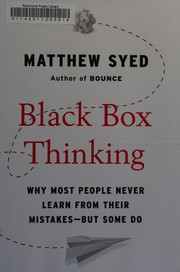
Black Box Thinking
Matthew Syed
Contrasts cultures that learn from mistakes with those that hide them through self-justification.
High relevanceExplore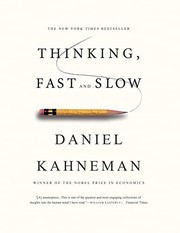 AI Recommendation
Thinking, Fast and Slow
Daniel Kahneman
Analyzes cognitive biases and heuristic traps that lead to systematic self-justification.
High relevanceExplore AI Recommendation
The Scout Mindset
Julia Galef
Contrasts truth-seeking mindsets with defensive rationalizations deployed to protect identity.
High relevanceExplore AI Recommendation
The Righteous Mind
Jonathan Haidt
Examines how moral reasoning primarily acts as a press secretary defending gut intuitions.
High relevanceExplore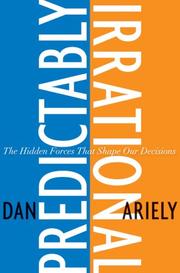 AI Recommendation
Predictably Irrational
Dan Ariely
Explores systematic irrationality and the subtle justifications used to preserve honest self-images.
Medium relevanceExplore AI Recommendation
You Are Not So Smart
David McRaney
Surveys the many cognitive biases that cause people to delude themselves daily.
Medium relevanceExplore