- Publish date
- 2008
- Publisher
- Penguin Books, Limited
- Description
Where to read & listen
This page may contain affiliate links. We may earn from qualifying purchases at no additional cost to you.
Book data & covers provided by Google Books and Open Library. Connections and summaries generated with Gemini AI.
Report incorrect dataBooks cited in Nudge
Suggested by AI, not verified against the full text. Check the original book before using them as a source.
 Citation
Choices, Values, and Frames
Daniel Kahneman and Amos Tversky
Supplies foundational research on prospect theory and framing effects used to demonstrate human departure from rational choice.
High relevanceExplore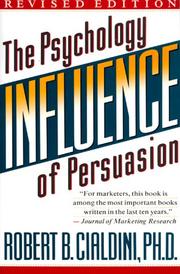 Citation
Influence: Science and Practice
Robert B. Cialdini
Cited to illustrate how social proof and conformity heavily sway individual decision-making in public and private contexts.
High relevanceExplore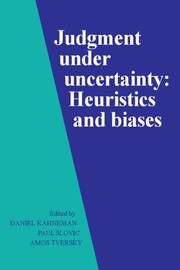 Citation
Judgment Under Uncertainty: Heuristics and Biases
Daniel Kahneman, Paul Slovic, and Amos Tversky
Provides the foundational cognitive heuristics—anchoring, availability, and representativeness—that underpin the entire nudging framework.
High relevanceExplore Citation
The Design of Everyday Things
Donald A. Norman
Norman's concepts of intuitive product design directly informed Thaler and Sunstein's principles of effective choice architecture.
High relevanceExplore Citation
The Theory of Moral Sentiments
Adam Smith
Cited to show that classical economics originally acknowledged human passions, myopia, and social empathy.
Medium relevanceExplore Citation
The Winner's Curse: Paradoxes and Anomalies of Economic Life
Richard H. Thaler
Thaler's earlier work establishing empirical economic market anomalies that contradict standard rational-actor models.
Medium relevanceExplore Citation
Micromotives and Macrobehavior
Thomas C. Schelling
Influenced the authors' understanding of self-command mechanisms and how individual decisions aggregate into societal outcomes.
Medium relevanceExplore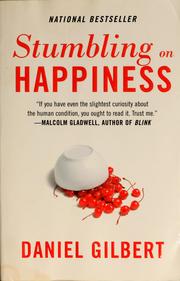 Citation
Stumbling on Happiness
Daniel Gilbert
Cited regarding human inability to accurately forecast future emotional states and satisfaction across major life choices.
Medium relevanceExplore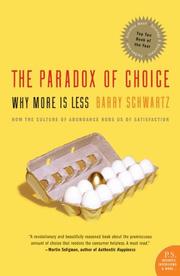 Citation
The Paradox of Choice
Barry Schwartz
Referenced to explain why excessive options paralyze decision-makers, motivating the need for well-structured default choices.
Medium relevanceExplore Citation
Obedience to Authority
Stanley Milgram
Cited to emphasize the profound power of authority and institutional framing over individual human behavior.
Medium relevanceExplore Citation
The Wealth of Nations
Adam Smith
Referenced as the classical foundation of market incentives, against which behavioral departures are contrasted.
Medium relevanceExplore
Recommendations
- AI Recommendation
Sludge: Bureaucrats, Law, and Why Calls Are on Hold
Cass R. Sunstein
Directly extends the nudge paradigm by analyzing psychological and administrative frictions that impede beneficial choices.
High relevanceExplore 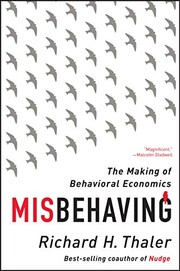 AI Recommendation
Misbehaving: The Making of Behavioral Economics
Richard H. Thaler
Provides Thaler's intellectual memoir tracing the history and battles that culminated in the nudge philosophy.
High relevanceExplore- AI Recommendation
Thinking, Fast and Slow
Daniel Kahneman
Systematizes the dual-process cognitive theory that underpins how automatic and reflective thinking respond to nudges.
High relevanceExplore  AI Recommendation
Scarcity: Why Having Too Little Means So Much
Sendhil Mullainathan and Eldar Shafir
Examines how mental bandwidth limitations impede optimal decision-making, offering deeper rationale for supportive choice architecture.
Medium relevanceExplore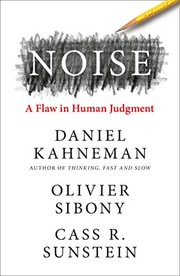 AI Recommendation
Noise: A Flaw in Human Judgment
Daniel Kahneman, Olivier Sibony, and Cass R. Sunstein
Co-authored by Sunstein, exploring unwanted variability in human judgment alongside systemic cognitive bias.
Medium relevanceExplore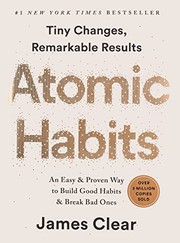 AI Recommendation
Atomic Habits
James Clear
Translates behavioral economics and environmental design into practical, individual-level choice architecture for habit formation.
Medium relevanceExplore