
Political Order and Political Decay
Francis FukuyamaEN
- Publish date
- 2014
- Publisher
- Profile Books
- Description
Where to read & listen
This page may contain affiliate links. We may earn from qualifying purchases at no additional cost to you.
Book data & covers provided by Google Books and Open Library. Connections and summaries generated with Gemini AI.
Report incorrect dataBooks mentioned & referenced in Political Order and Political Decay
Suggested by AI, not verified against the full text. Check the original book before using them as a source.
- Citation
Why Nations Fail
Daron Acemoglu and James A. Robinson
Discussed critically regarding the sequencing of state capacity building and the transition toward inclusive institutions.
High relevanceExplore  Citation
The Origins of Political Order
Francis Fukuyama
Fukuyama references his preceding volume to establish baseline definitions of the state, the rule of law, and accountable government.
High relevanceExplore Citation
Economy and Society
Max Weber
Cited extensively for the classic framework of rational-legal bureaucracy versus patrimonial and clientelistic administration.
High relevanceExplore- Citation
Political Order in Changing Societies
Samuel P. Huntington
Serves as the foundational theoretical inspiration for Fukuyama's analysis of political decay and institutional lagging.
High relevanceExplore  Citation
Democracy in America
Alexis de Tocqueville
Cited to trace the historical roots of America's distrust of centralized administrative authority and its reliance on courts and associations.
High relevanceExplore Citation
The Logic of Collective Action
Mancur Olson
Used to model how concentrated interests organize more effectively to capture state benefits than dispersed majorities.
High relevanceExplore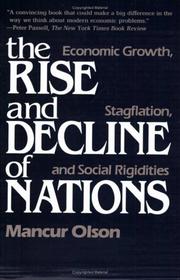 Citation
The Rise and Decline of Nations
Mancur Olson
Used to explain how entrenched interest groups cause institutional sclerosis and drive political decay in mature democracies.
High relevanceExplore Citation
The State in Africa: The Politics of the Belly
Jean-François Bayart
Cited to illustrate how modern state structures in sub-Saharan Africa were captured by neopatrimonial networks.
Medium relevanceExplore- Citation
Governing the Commons
Elinor Ostrom
Referenced in analyzing non-state, community-based solutions to collective action problems.
Medium relevanceExplore  Citation
Seeing Like a State
James C. Scott
Referenced in critiques of high-modernist bureaucratic planning that ignores local knowledge.
Medium relevanceExplore- Citation
Southern Politics in State and Nation
V.O. Key Jr.
Cited for empirical historical detail on patronage systems, one-party dominance, and clientelism in the American South.
Medium relevanceExplore 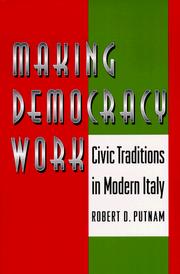 Citation
Making Democracy Work
Robert D. Putnam
Cited regarding regional disparities in social capital and public administration performance in Italy.
Medium relevanceExplore
There may be more citations. We show up to 12 per book to keep the list manageable.
Recommendations
 AI Recommendation
Violence and Social Orders
Douglass C. North, John Joseph Wallis, and Barry R. Weingast
Offers a highly complementary economic and institutional framework describing the transition from limited to open access orders.
High relevanceExplore- AI Recommendation
The Narrow Corridor
Daron Acemoglu and James A. Robinson
Examines the fragile balance between state capacity and societal power necessary to preserve liberty and avoid decay.
High relevanceExplore - AI Recommendation
How Democracies Die
Steven Levitsky and Daniel Ziblatt
Provides a contemporary look at institutional decay, norm erosion, and polarization in the United States and elsewhere.
Medium relevanceExplore - AI Recommendation
The Dictator's Handbook
Bruce Bueno de Mesquita and Alastair Smith
Explores how political survival mechanisms incentivize leaders to foster either public goods or clientelistic patronage.
Medium relevanceExplore 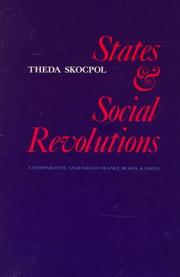 AI Recommendation
States and Social Revolutions
Theda Skocpol
A classic historical comparative study analyzing how structural state vulnerabilities lead to institutional collapse.
Medium relevanceExplore