
- Publish date
- 2005
- Publisher
- Donning Co. Publishers
- Description
Where to read & listen
This page may contain affiliate links. We may earn from qualifying purchases at no additional cost to you.
Book data & covers provided by Google Books and Open Library. Connections and summaries generated with Gemini AI.
Report incorrect dataBooks cited in Poor Charlie's Almanack
Suggested by AI, not verified against the full text. Check the original book before using them as a source.
 Citation
The Autobiography of Benjamin Franklin
Benjamin Franklin
Franklin serves as Munger's foundational role model for polymathic learning, practical wisdom, and personal ethics.
High relevanceExplore Citation
Guns, Germs, and Steel
Jared Diamond
Cited by Munger as a quintessential demonstration of using multidisciplinary mental models to understand human history.
High relevanceExplore Citation
Living Within Limits: Ecology, Economics, and Population Taboos
Garrett Hardin
Munger draws on Hardin's multidisciplinary insights regarding ecological limits, human psychology, and systemic trade-offs.
High relevanceExplore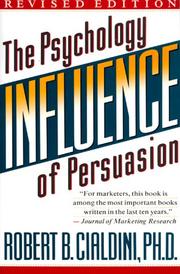 Citation
Influence: Science and Practice
Robert B. Cialdini
Munger heavily relies on Cialdini's principles of persuasion to frame his psychology of human misjudgment.
High relevanceExplore Citation
The Selfish Gene
Richard Dawkins
Referenced to explain evolutionary psychology and the biological roots of cooperative and competitive behaviors.
Medium relevanceExplore Citation
Models of My Life
Herbert A. Simon
Munger points to Simon's concept of bounded rationality as a key multidisciplinary decision-making model.
Medium relevanceExplore Citation
The Wealth of Nations
Adam Smith
Cited to discuss economic incentives, free-market dynamics, and the advantages of the division of labor.
Medium relevanceExplore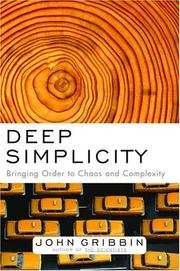 Citation
Deep Simplicity: Bringing Order to Chaos and Complexity
John Gribbin
Munger frequently praises this work for explaining how simple rules generate complex emergent behavior.
Medium relevanceExplore Citation
Judgment in Managerial Decision Making
Max H. Bazerman
Referenced for its empirical treatment of cognitive biases impacting business executives and organizational outcomes.
Medium relevanceExplore Citation
Only the Paranoid Survive
Andrew S. Grove
Cited for its tactical concepts regarding strategic inflection points and surviving massive competitive disruptions.
Medium relevanceExplore Citation
Titan: The Life of John D. Rockefeller, Sr.
Ron Chernow
Recommended by Munger for its historical insights into industrial scale, monopoly power, and business discipline.
Medium relevanceExplore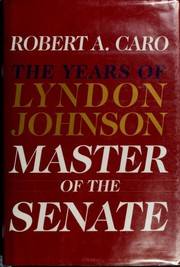 Citation
Master of the Senate
Robert A. Caro
Recommended by Munger as a profound study of political power, ambition, and psychological manipulation.
Medium relevanceExplore
There may be more citations. We show up to 12 per book to keep the list manageable.
Recommendations
 AI Recommendation
Seeking Wisdom: From Darwin to Munger
Peter Bevelin
Synthesizes Munger's multidisciplinary mental models, evolutionary biology, and decision-making frameworks.
High relevanceExplore AI Recommendation
Thinking, Fast and Slow
Daniel Kahneman
Explores cognitive heuristics and systemic biases that align closely with Munger's psychology of human misjudgment.
High relevanceExplore AI Recommendation
Fooled by Randomness
Nassim Nicholas Taleb
Explores probabilistic thinking, epistemic humility, and the role of luck in investing and life.
Medium relevanceExplore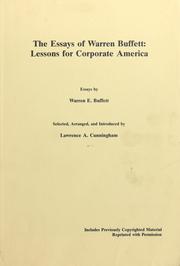 AI Recommendation
The Essays of Warren Buffett
Lawrence A. Cunningham
Complements Munger's mental models with the core investment principles practiced alongside Warren Buffett.
Medium relevanceExplore AI Recommendation
Principles: Life and Work
Ray Dalio
Advocates systematic decision-making, radical truthfulness, and mental model application in business and life.
Medium relevanceExplore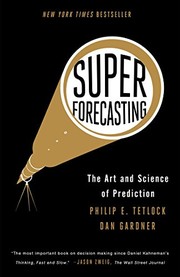 AI Recommendation
Superforecasting: The Art and Science of Prediction
Philip E. Tetlock
Details probabilistic forecasting and multidisciplinary approaches essential for sound judgment under uncertainty.
Medium relevanceExplore