
- Publish date
- 2015
- Publisher
- The Experiment
- Description
Where to read & listen
This page may contain affiliate links. We may earn from qualifying purchases at no additional cost to you.
Book data & covers provided by Google Books and Open Library. Connections and summaries generated with Gemini AI.
Report incorrect dataBooks cited in Prisoners of Geography
Suggested by AI, not verified against the full text. Check the original book before using them as a source.
 Citation
Democratic Ideals and Reality
Halford Mackinder
Provides the foundational Heartland theory explaining Eurasian geopolitical dynamics and Russian strategic vulnerability.
High relevanceExplore Citation
The Geography of the Peace
Nicholas J. Spykman
Informs the strategic importance of coastal Rimland territories in balancing continental powers.
High relevanceExplore- Citation
The Influence of Sea Power upon History, 1660–1783
Alfred Thayer Mahan
Underpins Marshall's analysis of maritime chokepoints and naval hegemony, particularly regarding the US and China.
High relevanceExplore  Citation
Guns, Germs, and Steel
Jared Diamond
Serves as a prime intellectual antecedent exploring geographic determinism and human developmental disparities.
Medium relevanceExplore Citation
World Order
Henry Kissinger
Informs discussions on the balance of power and historical international state systems.
Medium relevanceExplore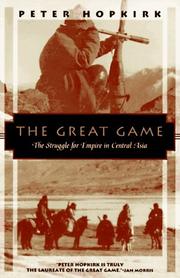 Citation
The Great Game: The Struggle for Empire in Central Asia
Peter Hopkirk
Informs historical context regarding Russian and British imperial rivalry over Central Asian terrain.
Medium relevanceExplore Citation
The Clash of Civilizations and the Remaking of World Order
Samuel P. Huntington
Referenced regarding fault lines, cultural borders, and post-Cold War geopolitical conflicts.
Medium relevanceExplore Citation
History of the Peloponnesian War
Thucydides
Referenced to illustrate the timeless nature of geopolitical rivalries rooted in geography and power.
Medium relevanceExplore Citation
The Art of War
Sun Tzu
Referenced regarding the foundational military importance of understanding terrain and physical barriers.
Medium relevanceExplore
Recommendations
 AI Recommendation
The Power of Geography
Tim Marshall
The direct sequel expanding the geographical analysis to ten additional regions and space.
High relevanceExplore AI Recommendation
The Revenge of Geography
Robert D. Kaplan
A closely aligned work arguing that physical geography critically shapes modern political outcomes and conflicts.
High relevanceExplore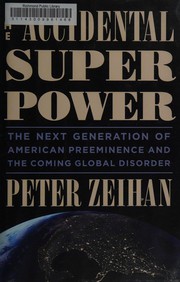 AI Recommendation
The Accidental Superpower
Peter Zeihan
Examines how geography and navigable river networks determine national wealth and strategic power.
High relevanceExplore AI Recommendation
Why the West Rules—for Now
Ian Morris
Analyzes how physical geography drove the divergent development patterns of Eastern and Western civilizations.
Medium relevanceExplore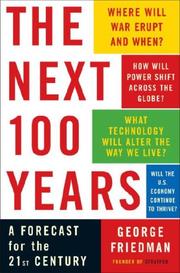 AI Recommendation
The Next 100 Years
George Friedman
Uses geopolitical and geographical imperatives to forecast future geopolitical friction points.
Medium relevanceExplore AI Recommendation
Connectography: Mapping the Future of Global Civilization
Parag Khanna
Offers a counterpoint arguing that human infrastructure and connectivity are eclipsing traditional physical borders.
Medium relevanceExplore