
Superforecasting
Philip E. Tetlock, Dan GardnerEN
- Publish date
- 2015
- Publisher
- Random House Books
- Description
Where to read & listen
This page may contain affiliate links. We may earn from qualifying purchases at no additional cost to you.
Book data & covers provided by Google Books and Open Library. Connections and summaries generated with Gemini AI.
Report incorrect dataBooks mentioned & referenced in Superforecasting
Suggested by AI, not verified against the full text. Check the original book before using them as a source.
 Citation
Thinking, Fast and Slow
Daniel Kahneman
Frequently cited to explain dual-process theory (System 1 and System 2) and the cognitive biases superforecasters learn to mitigate.
High relevanceExplore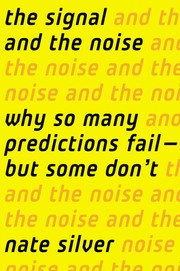 Citation
The Signal and the Noise: Why So Many Predictions Fail—but Some Don't
Nate Silver
Referenced in discussions of probabilistic thinking, Bayesian updating, and successful forecasting models like meteorology.
High relevanceExplore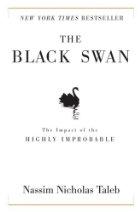 Citation
The Black Swan: The Impact of the Highly Improbable
Nassim Nicholas Taleb
Discussed as an intellectual counterpoint regarding whether extreme, unpredictable events render regular forecasting efforts futile.
High relevanceExplore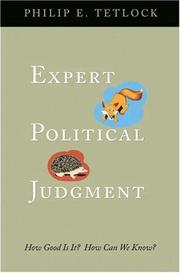 Citation
Expert Political Judgment: How Good Is It? How Can We Know?
Philip E. Tetlock
Serves as the foundational antecedent to the book, detailing Tetlock's landmark twenty-year study on political forecasting and the hedgehog versus fox framework.
High relevanceExplore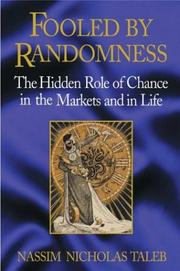 Citation
Fooled by Randomness: The Hidden Role of Chance in Life and in the Markets
Nassim Nicholas Taleb
Referenced regarding the cognitive trap of confusing lucky streaks with genuine predictive skill.
Medium relevanceExplore Citation
The Wisdom of Crowds
James Surowiecki
Cited when discussing the aggregation of decentralized estimates and how Good Judgment Project superteams beat simple crowdsourced averages.
Medium relevanceExplore- Citation
Judgment Under Uncertainty: Heuristics and Biases
Daniel Kahneman, Paul Slovic, Amos Tversky
Referenced for the underlying behavioral economics literature on human error in evaluating probability.
Medium relevanceExplore  Citation
A Philosophical Essay on Probabilities
Pierre-Simon Laplace
Discussed in relation to determinism and the theoretical limits of perfect knowledge known as Laplace's demon.
Medium relevanceExplore Citation
The Checklist Manifesto: How to Get Things Right
Atul Gawande
Mentioned as an illustration of how disciplined routines and explicit tracking can prevent systemic judgment errors.
Medium relevanceExplore
Recommendations
 AI Recommendation
Thinking in Bets: Making Smarter Decisions When You Don't Have All the Facts
Annie Duke
Applies probabilistic reasoning and process-versus-outcome separation to everyday business and life decisions.
High relevanceExplore- AI Recommendation
The Scout Mindset: Why Some People See Things Clearly and Others Don't
Julia Galef
Deepens the psychological profile of superforecasters by exploring the drive to see reality as accurately as possible.
High relevanceExplore  AI Recommendation
Noise: A Flaw in Human Judgment
Daniel Kahneman, Olivier Sibony, Cass R. Sunstein
Explores how unwanted variability in expert judgment degrades predictive accuracy and decision quality.
High relevanceExplore AI Recommendation
Range: Why Generalists Triumph in a Specialized World
David Epstein
Corroborates Tetlock's findings on the predictive superiority of multidisciplinary 'foxes' over domain-narrow 'hedgehogs'.
Medium relevanceExplore AI Recommendation
Poor Charlie's Almanack
Charles T. Munger
Advocates the acquisition of multiple mental models to reduce blind spots, echoing the cognitive practices of superforecasters.
Medium relevanceExplore