- Publish date
- 1998
- Publisher
- Lulu Press, Inc.
- Description
Where to read & listen
This page may contain affiliate links. We may earn from qualifying purchases at no additional cost to you.
Book data & covers provided by Google Books and Open Library. Connections and summaries generated with Gemini AI.
Report incorrect dataBooks cited in The 48 Laws of Power
Suggested by AI, not verified against the full text. Check the original book before using them as a source.
 Citation
The Art of War
Sun Tzu
Provides classic military strategies on deception and strategy directly applied throughout the laws.
High relevanceExplore Citation
The Prince
Niccolò Machiavelli
Serves as a foundational text for Greene's strategic philosophy on statecraft and manipulation.
High relevanceExplore Citation
The Art of Worldly Wisdom
Baltasar Gracian
A primary source for aphorisms on discretion, strategy, and managing human nature.
High relevanceExplore Citation
The Book of the Courtier
Baldassare Castiglione
Influences laws concerning nonchalance, reputation, and navigating dangerous social hierarchies.
Medium relevanceExplore Citation
Memoirs
Giacomo Casanova
Used to illustrate the laws of seduction, charm, and social manipulation.
Medium relevanceExplore Citation
Histories
Tacitus
Cited for historical examples regarding political intrigue and the mechanics of imperial power.
Medium relevanceExplore Citation
The Fables
Jean de La Fontaine
Frequently cited for allegorical lessons on human deception and power dynamics.
Medium relevanceExplore
Recommendations
 AI Recommendation
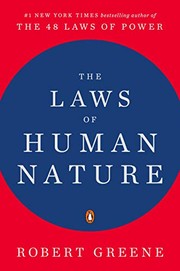
The Laws of Human Nature
Robert Greene
Delves deeper into the psychological underpinnings of the behaviors described in the 48 Laws.
High relevanceExplore AI Recommendation
Mastery
Robert Greene
Explores the acquisition of supreme skill and power, serving as a thematic companion.
High relevanceExplore AI Recommendation
The Dictator's Handbook
Bruce Bueno de Mesquita and Alastair Smith
Shares a realpolitik perspective on how political power is obtained and maintained.
Medium relevanceExplore