
The Bed of Procrustes
Nassim Nicholas TalebEN
- Publish date
- 2010
- Publisher
- Ediciones Paidós
- Description
Where to read & listen
This page may contain affiliate links. We may earn from qualifying purchases at no additional cost to you.
Book data & covers provided by Google Books and Open Library. Connections and summaries generated with Gemini AI.
Report incorrect dataBooks mentioned & referenced in The Bed of Procrustes
Suggested by AI, not verified against the full text. Check the original book before using them as a source.
 Citation
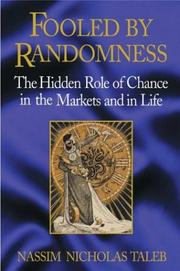
Fooled by Randomness
Nassim Nicholas Taleb
Mentioned as an earlier exploration of probability, mistaking luck for skill, and epistemic hubris.
High relevanceExplore Citation
Letters from a Stoic
Seneca
Cited for practical Stoic insights into handling fortune, downside risk, and artificial dependencies.
High relevanceExplore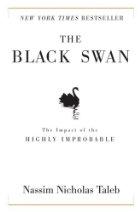 Citation
The Black Swan
Nassim Nicholas Taleb
Referenced directly as the narrative work whose philosophical bedrock is condensed into these aphorisms.
High relevanceExplore- Citation
Maxims and Moral Reflections
François de La Rochefoucauld
Serves as a primary stylistic and philosophical inspiration for Taleb's aphoristic dissection of human vanity and illusions.
High relevanceExplore  Citation
Essays
Michel de Montaigne
Invoked as an ideal model of classical skeptical wisdom and lived, non-academic philosophy.
High relevanceExplore Citation
Fragments
Heraclitus
Cited for early pre-Socratic wisdom concerning perpetual change, paradox, and nonlinear realities.
Medium relevanceExplore- Citation
The Logic of Scientific Discovery
Karl Popper
Informs Taleb's critique of naive empiricism and the asymmetric power of negative proof.
Medium relevanceExplore - Citation
Meditations
Marcus Aurelius
Referenced as a benchmark for personal, uncompromising philosophical self-examination.
Medium relevanceExplore  Citation
Twilight of the Idols
Friedrich Nietzsche
Referenced in the tradition of challenging intellectual orthodoxies using sharp, biting maxims.
Medium relevanceExplore- Citation
The Trouble with Being Born
Emil Cioran
Echoed in Taleb's engagement with modern contrarian, existential, and skeptical aphoristic thought.
Medium relevanceExplore
Recommendations
 AI Recommendation
Antifragile
Nassim Nicholas Taleb
Expands the aphoristic warnings of Procrustes into a comprehensive operating system for uncertainty.
High relevanceExplore AI Recommendation
The Enchiridion
Epictetus
Offers a concise classical guide on recognizing the boundary between what we control and what we do not.
High relevanceExplore AI Recommendation
Skin in the Game
Nassim Nicholas Taleb
Deepens the aphorisms on ethical asymmetry, accountability, and the flaws of ungrounded experts.
High relevanceExplore AI Recommendation
Thinking, Fast and Slow
Daniel Kahneman
Provides empirical cognitive psychology for why minds fit complex realities into narrow, Procrustean frames.
Medium relevanceExplore AI Recommendation
Essays and Aphorisms
Arthur Schopenhauer
Shares a similarly misanthropic, incisive clarity regarding human folly, pretension, and society.
Medium relevanceExplore- AI Recommendation
The Book of Disquiet
Fernando Pessoa
An evocative collection of fragmentary, introspective observations on the paradoxes of everyday consciousness.
Medium relevanceExplore