
The Blank Slate
Steven PinkerEN
- Publish date
- 2002
- Publisher
- E-Penguin
- Description
Where to read & listen
This page may contain affiliate links. We may earn from qualifying purchases at no additional cost to you.
Book data & covers provided by Google Books and Open Library. Connections and summaries generated with Gemini AI.
Report incorrect dataBooks mentioned & referenced in The Blank Slate
Suggested by AI, not verified against the full text. Check the original book before using them as a source.
 Citation
An Essay Concerning Human Understanding
John Locke
Pinker critiques Locke's premise that the mind begins as a white paper devoid of innate ideas.
High relevanceExplore Citation
The Adapted Mind
Jerome H. Barkow, Leda Cosmides, and John Tooby
Pinker cites this foundational volume of evolutionary psychology to describe the modular architecture of the human mind.
High relevanceExplore Citation
Emile, or On Education
Jean-Jacques Rousseau
Pinker critiques Rousseau's romantic belief in the natural, uncorrupted innocence of humanity as the root of the Noble Savage myth.
High relevanceExplore Citation
The Nurture Assumption
Judith Rich Harris
Pinker highlights Harris's research to demonstrate that peer groups, rather than parental styles, dominate child socialization.
High relevanceExplore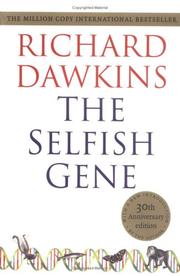 Citation
The Selfish Gene
Richard Dawkins
Pinker utilizes Dawkins's gene-centered model of natural selection to explain altruism, kinship, and social conflict.
High relevanceExplore Citation
Sociobiology: The New Synthesis
E. O. Wilson
Pinker discusses the academic and political firestorm ignited by Wilson's application of evolutionary biology to human behavior.
High relevanceExplore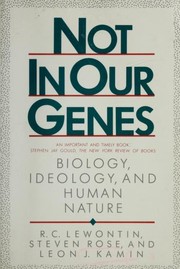 Citation
Not in Our Genes
Richard Lewontin, Steven Rose, and Leon Kamin
Pinker engages this text as a primary counterpoint representing ideological opposition to biological explanations of human behavior.
High relevanceExplore Citation
Human Universals
Donald E. Brown
Pinker draws heavily on Brown's catalog of pan-cultural traits to disprove the idea of radical cultural plasticity.
High relevanceExplore Citation
Consilience: The Unity of Knowledge
E. O. Wilson
Pinker supports Wilson's call to synthesize the natural sciences with the social sciences and humanities.
Medium relevanceExplore- Citation
The Bell Curve
Richard J. Herrnstein and Charles Murray
Pinker examines the intense public backlash against this work to illustrate the moral taboos surrounding human cognitive variation.
Medium relevanceExplore  Citation
Darwin's Dangerous Idea
Daniel C. Dennett
Pinker references Dennett to explore how natural selection dissolves traditional religious and philosophical views of the mind.
Medium relevanceExplore Citation
The Concept of Mind
Gilbert Ryle
Pinker invokes Ryle's phrase 'the ghost in the machine' to challenge Cartesian dualism in theories of human nature.
Medium relevanceExplore
There may be more citations. We show up to 12 per book to keep the list manageable.