
- Publish date
- 1973
- Publisher
- Free Press Paperbacks
- Description
Where to read & listen
This page may contain affiliate links. We may earn from qualifying purchases at no additional cost to you.
Book data & covers provided by Google Books and Open Library. Connections and summaries generated with Gemini AI.
Report incorrect dataBooks cited in The Denial of Death
Suggested by AI, not verified against the full text. Check the original book before using them as a source.
 Citation
Beyond Psychology
Otto Rank
Becker heavily relies on Rank's post-Freudian ideas regarding human striving for spiritual immortality.
High relevanceExplore Citation
The Sickness Unto Death
Søren Kierkegaard
Becker uses Kierkegaard's analysis of despair to describe character armor and human neurosis.
High relevanceExplore Citation
Art and Artist
Otto Rank
Informs Becker's concept of the 'immortality project' and the creative urge to transcend death.
High relevanceExplore- Citation
Life Against Death: The Psychoanalytical Meaning of History
Norman O. Brown
A primary contemporary influence synthesizing psychoanalysis, bodily repression, and historical human culture.
High relevanceExplore  Citation
Civilization and Its Discontents
Sigmund Freud
Becker critiques and reinterprets Freud's views on cultural sublimation and instinctual renunciation.
High relevanceExplore Citation
The Concept of Dread
Søren Kierkegaard
Provides the existential-theological foundation for Becker's views on anxiety and human finitude.
High relevanceExplore Citation
The Varieties of Religious Experience
William James
Referenced concerning the 'twice-born' character and confronting the terror of the world.
Medium relevanceExplore Citation
The Courage to Be
Paul Tillich
Referenced in discussions on existential courage, anxiety, and the ontological threat of nonbeing.
Medium relevanceExplore Citation
Beyond the Pleasure Principle
Sigmund Freud
Critiqued by Becker regarding Freud's death instinct theory versus universal death anxiety.
Medium relevanceExplore Citation
Death in Life: Survivors of Hiroshima
Robert Jay Lifton
Cited for Lifton's insights into symbolic immortality and the psychological trauma of mass death.
Medium relevanceExplore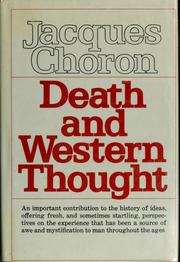 Citation
Death and Western Thought
Jacques Choron
Cited for historical context on Western philosophy's enduring preoccupation with mortality.
Medium relevanceExplore Citation
Escape from Freedom
Erich Fromm
Discussed in relation to humanity's inclination toward authoritarian submission as a psychological defense.
Medium relevanceExplore
There may be more citations. We show up to 12 per book to keep the list manageable.
Recommendations
 AI Recommendation
The Worm at the Core: On the Role of Death in Life
Sheldon Solomon, Jeff Greenberg, and Tom Pyszczynski
Provides extensive empirical psychological evidence validating Becker's terror management hypotheses.
High relevanceExplore AI Recommendation
Existential Psychotherapy
Irvin D. Yalom
Explores death anxiety as an ultimate concern in clinical psychology, mirroring Becker's premises.
High relevanceExplore AI Recommendation
Being and Time
Martin Heidegger
Philosophically conceptualizes authentic human existence through confrontation with Being-towards-death.
Medium relevanceExplore AI Recommendation
Immortality: The Quest to Live Forever and How It Drives Civilization
Stephen Cave
Categorizes human civilization's cultural systems as explicit strategies to conquer mortality.
Medium relevanceExplore AI Recommendation
Mortal Questions
Thomas Nagel
Philosophical essays addressing the absurdity of human existence and the asymmetry of death.
Medium relevanceExplore