The General Theory of Employment, Interest and Money
John Maynard KeynesEN
- Publish date
- 2016-12-20
- Publisher
- Youcanprint
- Description
Where to read & listen
This page may contain affiliate links. We may earn from qualifying purchases at no additional cost to you.
Book data & covers provided by Google Books and Open Library. Connections and summaries generated with Gemini AI.
Report incorrect dataBooks mentioned & referenced in The General Theory of Employment, Interest and Money
Suggested by AI, not verified against the full text. Check the original book before using them as a source.
 Citation
The Wealth of Nations
Adam Smith
Keynes critiques Classical economics foundational assumptions established by Adam Smith regarding self-correcting markets.
High relevanceExplore- Citation
The Economics of Welfare
A.C. Pigou
Pigou serves as Keynes's primary contemporary target representing the orthodox Classical theory of employment.
High relevanceExplore - Citation
The Theory of Unemployment
A.C. Pigou
Keynes uses Pigou's work as the contemporary representative model of the classical theory he seeks to overturn.
High relevanceExplore - Citation
The Wealth of Nations
Adam Smith
Keynes critiques Classical economic assumptions originating from Smith regarding self-regulating markets and full employment.
High relevanceExplore - Citation
The Theory of Unemployment
A.C. Pigou
Keynes directly dissects Pigou's wage-flexibility arguments as a cause of employment fluctuations.
High relevanceExplore - Citation
A Tract on Monetary Reform
John Maynard Keynes
Keynes builds upon and revises his own earlier views on monetary theory and price stability.
High relevanceExplore - Citation
Risk, Uncertainty and Profit
Frank H. Knight
Keynes draws upon distinctions between quantifiable risk and unquantifiable uncertainty in investment decisions.
High relevanceExplore 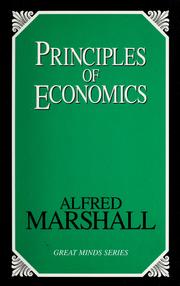 Citation
Principles of Economics
Alfred Marshall
Keynes references his mentor's work extensively while refuting Marshallian microeconomic equilibrium in macroeconomics.
High relevanceExplore Citation
A Treatise on Money
John Maynard Keynes
The General Theory directly develops and corrects the theoretical framework Keynes originally presented in this work.
High relevanceExplore- Citation
Principles of Economics
Alfred Marshall
Keynes builds upon and critiques the microeconomic foundation established by his former teacher.
High relevanceExplore  Citation
An Essay on the Principle of Population
Thomas Robert Malthus
Keynes praises Malthus for anticipating the concept of effective demand and underspending.
High relevanceExplore- Citation
Principles of Political Economy
David Ricardo
Keynes identifies Ricardo as the originator of the classical doctrine that supply creates its own demand.
High relevanceExplore
There may be more citations. We show up to 12 per book to keep the list manageable.
Recommendations
 AI Recommendation
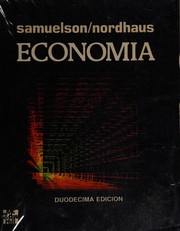
Economics
Paul Samuelson
Synthesized Keynesian macroeconomics with classical microeconomics into the Neoclassical Synthesis.
High relevanceExplore- AI Recommendation
A Monetary History of the United States, 1867-1960
Milton Friedman and Anna Jacobson Schwartz
Provides the foundational Monetarist alternative to Keynesian explanations of economic downturns.
High relevanceExplore  AI Recommendation
Risk, Uncertainty and Profit
Frank Knight
Explores radical uncertainty, strongly complementing Keynes's views on investment decision-making under unquantifiable risk.
High relevanceExplore AI Recommendation
A Theory of the Consumption Function
Milton Friedman
Formalizes the monetarist challenge to Keynes's simple marginal propensity to consume.
High relevanceExplore- AI Recommendation
Capitalism, Socialism and Democracy
Joseph Schumpeter
Offers an alternative vision of economic dynamics focused on innovation and creative destruction rather than aggregate demand.
High relevanceExplore  AI Recommendation
The Road to Serfdom
Friedrich Hayek
Offers the definitive free-market critique of state interventionism and macroeconomic planning.
High relevanceExplore