- Publish date
- 1949
- Publisher
- Fondo de Cultura Económica
- Description
Where to read & listen
This page may contain affiliate links. We may earn from qualifying purchases at no additional cost to you.
Book data & covers provided by Google Books and Open Library. Connections and summaries generated with Gemini AI.
Report incorrect dataBooks cited in The hero with a thousand faces
Suggested by AI, not verified against the full text. Check the original book before using them as a source.
 Citation
Psychology of the Unconscious
Carl Gustav Jung
Provided the psychological framework of archetypes and the collective unconscious underpinning the hero journey.
High relevanceExplore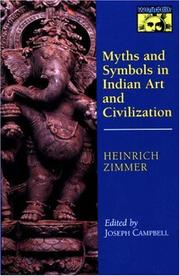 Citation
Myths and Symbols in Indian Art and Civilization
Heinrich Zimmer
Influenced Campbell's interpretation of Eastern spiritual traditions, cyclical cosmology, and mythic art.
High relevanceExplore Citation
The Golden Bough
Sir James George Frazer
Supplied extensive comparative ethnological examples of sacred kingship, death, and resurrection myths.
High relevanceExplore Citation
Finnegans Wake
James Joyce
Source of the term 'monomyth' and heavily cited for universal literary and mythic synthesis.
High relevanceExplore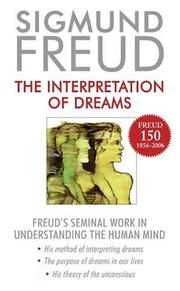 Citation
The Interpretation of Dreams
Sigmund Freud
Cited frequently to connect the symbolism of personal dreams with collective world mythologies.
High relevanceExplore Citation
The Rites of Passage
Arnold van Gennep
Provided the foundational threefold structural schema: separation, initiation, and return.
High relevanceExplore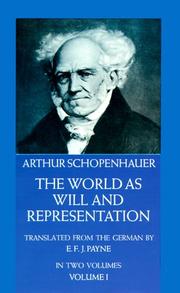 Citation
The World as Will and Representation
Arthur Schopenhauer
Philosophical influence cited on the transcendent unity underlying diverse empirical manifestations.
Medium relevanceExplore Citation
The Golden Ass
Apuleius
Referenced as a primary narrative example of classical initiation into mystery cults and metamorphosis.
Medium relevanceExplore Citation
The Divine Comedy
Dante Alighieri
Frequently referenced as a classic Western literary realization of the heroic spiritual descent and transformation.
Medium relevanceExplore Citation
Hinduism and Buddhism
Ananda K. Coomaraswamy
Cited for perennial philosophy insights and traditional metaphysical interpretations of Asian myths.
Medium relevanceExplore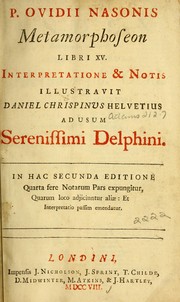 Citation
Metamorphoses
Ovid
Utilized as a major classical repository for mythic motifs of transformation and divine encounters.
Medium relevanceExplore Citation
Das Zeitalter des Sonnengottes
Leo Frobenius
Cited for morphological and cultural theories regarding global solar hero myth cycles.
Medium relevanceExplore
There may be more citations. We show up to 12 per book to keep the list manageable.
Recommendations
 AI Recommendation
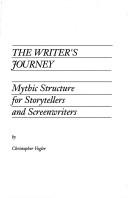
The Writer's Journey: Mythic Structure for Writers
Christopher Vogler
Directly operationalizes Campbell's monomyth into an influential structural guide for modern screenwriting.
High relevanceExplore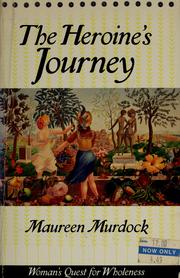 AI Recommendation
The Heroine's Journey
Maureen Murdock
Critiques Campbell's masculine model to outline a distinct mythic journey for female individuation.
High relevanceExplore AI Recommendation
The Myth of the Eternal Return
Mircea Eliade
Complements Campbell through comparative analysis of sacred time and archaic regeneration rituals.
High relevanceExplore AI Recommendation
Anatomy of Criticism
Northrop Frye
Presents a complementary archetypal classification of literary narratives based on seasonal myth cycles.
Medium relevanceExplore AI Recommendation
The Hero Within: Six Archetypes We Live By
Carol S. Pearson
Adapts the hero's journey into practical psychological archetypes for personal identity development.
Medium relevanceExplore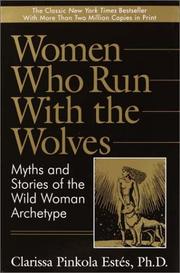 AI Recommendation
Women Who Run with the Wolves
Clarissa Pinkola Estés
Applies archetypal and Jungian storytelling to female psychological renewal and instinctual recovery.
Medium relevanceExplore