- Publish date
- 2011
- Publisher
- Pantheon Books, a division of Random House, Inc.
- Description
Where to read & listen
This page may contain affiliate links. We may earn from qualifying purchases at no additional cost to you.
Book data & covers provided by Google Books and Open Library. Connections and summaries generated with Gemini AI.
Report incorrect dataBooks cited in The Information
Suggested by AI, not verified against the full text. Check the original book before using them as a source.
 Citation
What Is Life?
Erwin Schrödinger
Introduced the concept of negative entropy and genetic information preceding the discovery of DNA.
High relevanceExplore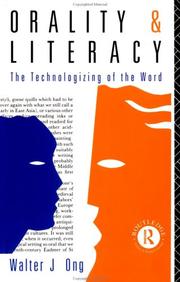 Citation
Orality and Literacy
Walter J. Ong
Examines how the invention of writing radically reorganized human consciousness and knowledge storage.
High relevanceExplore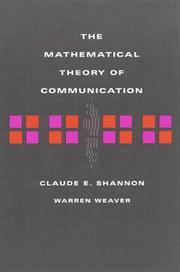 Citation
The Mathematical Theory of Communication
Claude E. Shannon and Warren Weaver
Provides the foundational mathematical framework for quantifying information and entropy explored throughout the book.
High relevanceExplore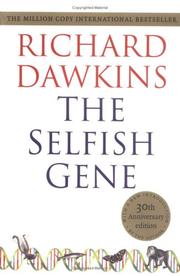 Citation
The Selfish Gene
Richard Dawkins
Cited for introducing the concept of the meme as an evolving unit of cultural information.
High relevanceExplore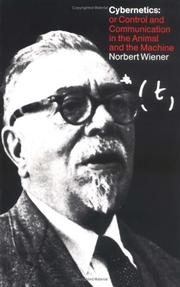 Citation
Cybernetics: Or Control and Communication in the Animal and the Machine
Norbert Wiener
Explores feedback loops and the intersection of communication, control systems, and human thought.
High relevanceExplore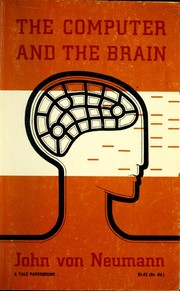 Citation
The Computer and the Brain
John von Neumann
Cited regarding digital versus analog processing and information architecture in brains and machines.
Medium relevanceExplore Citation
Passages from the Life of a Philosopher
Charles Babbage
Details the conception and mechanics of the Difference and Analytical Engines.
Medium relevanceExplore- Citation
Preface to Plato
Eric A. Havelock
Analyzes the transition from oral poetic tradition to literate, abstract thought in ancient Greece.
Medium relevanceExplore 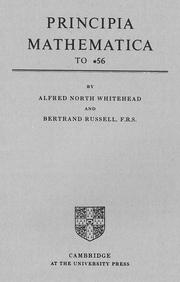 Citation
Principia Mathematica
Alfred North Whitehead and Bertrand Russell
Referenced in the history of symbolic logic, axiomatic systems, and Gödelian undecidability.
Medium relevanceExplore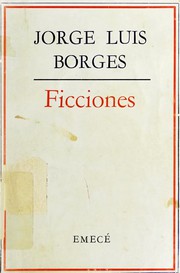 Citation
Ficciones
Jorge Luis Borges
Referenced for 'The Library of Babel', illustrating an infinite, combinatorial universe of information.
Medium relevanceExplore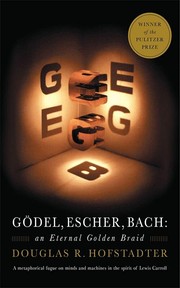 Citation
Gödel, Escher, Bach: An Eternal Golden Braid
Douglas Hofstadter
Explores self-reference, logic, computation, and information networks across disciplines.
Medium relevanceExplore Citation
A Budget of Paradoxes
Augustus De Morgan
Referenced during discussions of early mathematical logic and communication eccentricities.
Medium relevanceExplore
There may be more citations. We show up to 12 per book to keep the list manageable.
Recommendations
 AI Recommendation
The Control Revolution
James R. Beniger
Explores the technological and economic origins of the information society in response to industrial expansion.
High relevanceExplore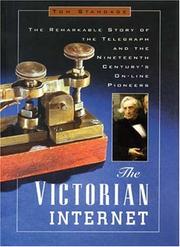 AI Recommendation
The Victorian Internet
Tom Standage
Traces the revolutionary cultural and societal impact of the electric telegraph in the nineteenth century.
High relevanceExplore AI Recommendation
How We Became Posthuman
N. Katherine Hayles
Critiques early cybernetic theories that separated disembodied information from material substrates.
Medium relevanceExplore AI Recommendation
Why Information Grows
César Hidalgo
Analyzes how physical order, computation, and information processing drive economic development.
Medium relevanceExplore- AI Recommendation
The Philosophy of Information
Luciano Floridi
Provides a rigorous philosophical foundation for conceptualizing information as a fundamental reality.
Medium relevanceExplore 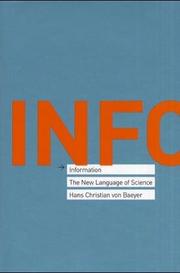 AI Recommendation
Information: The New Language of Science
Hans Christian von Baeyer
Explains how concepts of information have reshaped modern physics, from thermodynamics to quantum theory.
Medium relevanceExplore