- Publish date
- 1997
- Publisher
- HarperBusiness
- Description
Where to read & listen
This page may contain affiliate links. We may earn from qualifying purchases at no additional cost to you.
Book data & covers provided by Google Books and Open Library. Connections and summaries generated with Gemini AI.
Report incorrect dataBooks cited in The Innovator's Dilemma
Suggested by AI, not verified against the full text. Check the original book before using them as a source.
- Citation
Wellsprings of Knowledge
Dorothy Leonard-Barton
Cited for the concept of core rigidities, illustrating why capabilities can turn into liabilities.
High relevanceExplore  Citation
Managing the Resource Allocation Process
Joseph L. Bower
Provides foundational research showing how resource allocation processes shape strategic direction and inhibit disruptive response.
High relevanceExplore Citation
Innovation: The Attacker's Advantage
Richard N. Foster
Introduces the S-curve model used by Christensen to analyze performance trajectories and technological transitions.
High relevanceExplore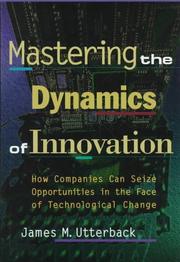 Citation
Mastering the Dynamics of Innovation
James M. Utterback
Explores dominant designs and patterns of industrial innovation referenced in Christensen's market trajectory analysis.
High relevanceExplore Citation
Diffusion of Innovations
Everett M. Rogers
Foundational text referenced regarding how novel technologies propagate through adopter segments over time.
Medium relevanceExplore Citation
The Rise and Fall of Strategic Planning
Henry Mintzberg
Informs the distinction between deliberate planning and emergent strategy crucial for managing disruptive innovations.
Medium relevanceExplore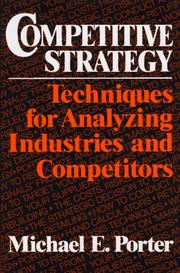 Citation
Competitive Strategy
Michael E. Porter
Cited regarding industry structure analysis and how value networks shape corporate cost structures.
Medium relevanceExplore Citation
Managing New Product and Process Development
Steven C. Wheelwright and Kim B. Clark
Referenced regarding product development cycles, development capabilities, and aggregate project planning frameworks.
Medium relevanceExplore Citation
The Structure of Scientific Revolutions
Thomas S. Kuhn
Cited metaphorically to describe paradigm shifts in technological capabilities and prevailing engineering frameworks.
Medium relevanceExplore
Recommendations
 AI Recommendation
Only the Paranoid Survive
Andrew S. Grove
Provides an insider perspective on navigating 10x strategic inflection points comparable to disruptive shifts.
High relevanceExplore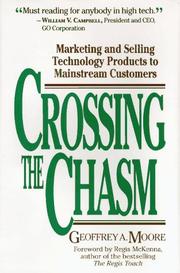 AI Recommendation
Crossing the Chasm
Geoffrey A. Moore
Complements Christensen by focusing on the market adoption gap between early adopters and mainstream customers.
High relevanceExplore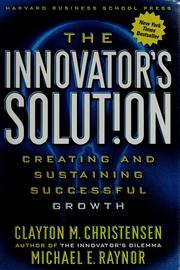 AI Recommendation
The Innovator's Solution
Clayton M. Christensen and Michael E. Raynor
The direct follow-up detailing prescriptive guidance on how to create and manage disruptive businesses.
High relevanceExplore AI Recommendation
Blue Ocean Strategy
W. Chan Kim and Renée Mauborgne
Shares Christensen's emphasis on competing against non-consumption by opening uncontested market spaces.
Medium relevanceExplore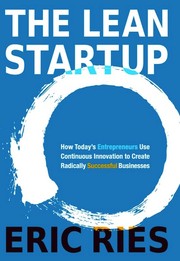 AI Recommendation
The Lean Startup
Eric Ries
Offers tactical methodologies for navigating market uncertainty and discovering viable customer models for innovations.
Medium relevanceExplore AI Recommendation
The End of Competitive Advantage
Rita Gunther McGrath
Argues that sustainable advantage is dead, echoing Christensen's findings on the vulnerability of market leaders.
Medium relevanceExplore