- Publish date
- 1899
- Publisher
- Lulu Press, Inc.
- Description
Where to read & listen
This page may contain affiliate links. We may earn from qualifying purchases at no additional cost to you.
Book data & covers provided by Google Books and Open Library. Connections and summaries generated with Gemini AI.
Report incorrect dataBooks cited in The Interpretation of Dreams
Suggested by AI, not verified against the full text. Check the original book before using them as a source.
 Citation
Studies on Hysteria
Josef Breuer and Sigmund Freud
Provides the foundational clinical cases and cathartic method that led directly to dream analysis.
High relevanceExplore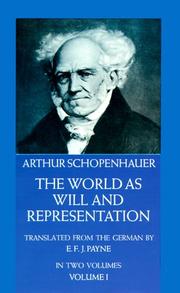 Citation
The World as Will and Representation
Arthur Schopenhauer
Freud engages with Schopenhauer's concept of the unconscious drive and repression mechanisms.
High relevanceExplore Citation
Philosophy of Unconscious
Eduard von Hartmann
Freud references Hartmann's philosophical theories regarding the active nature of the unconscious mind.
High relevanceExplore Citation
Oedipus Rex
Sophocles
Freud uses this classic tragedy to illustrate the universal Oedipus complex discovered through dream analysis.
High relevanceExplore Citation
Psychophysik
Gustav Theodor Fechner
Freud draws on Fechner's psychophysical theories, particularly the concept of psychic energy and threshold.
High relevanceExplore Citation
Hamlet
William Shakespeare
Freud analyzes Hamlet's hesitation through the lens of repressed unconscious wish fulfillment.
Medium relevanceExplore Citation
Memory: A Contribution to Experimental Psychology
Hermann Ebbinghaus
Freud cites contemporary memory research to explain dream displacement, condensation, and memory retention.
Medium relevanceExplore Citation
The Psychology of Suggestion
Boris Sidis
Freud references contemporary hypnotic and suggestion research to contextualize subconscious mental states.
Medium relevanceExplore
Recommendations
 AI Recommendation
The Psychopathology of Everyday Life
Sigmund Freud
Applies the dream-work mechanisms of repression and unconscious desires to slips of the tongue.
High relevanceExplore AI Recommendation
Three Essays on the Theory of Sexuality
Sigmund Freud
Expands on the infantile sexual wishes identified as the core source of dream thoughts.
High relevanceExplore