The Laws of Human Nature
Robert GreeneEN
- Publish date
- 2019-10-01
- Publisher
- Penguin
- Description
Where to read & listen
This page may contain affiliate links. We may earn from qualifying purchases at no additional cost to you.
Book data & covers provided by Google Books and Open Library. Connections and summaries generated with Gemini AI.
Report incorrect dataBooks mentioned & referenced in The Laws of Human Nature
Suggested by AI, not verified against the full text. Check the original book before using them as a source.
 Citation
The Prince
Niccolò Machiavelli
Provides foundational insights on social strategy, manipulation, and accepting human reality as it is.
High relevanceExplore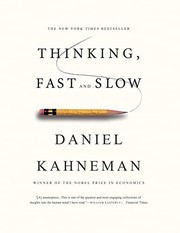 Citation
Thinking, Fast and Slow
Daniel Kahneman
Cited to support observations on systemic cognitive biases and the unconscious drivers of irrational decision-making.
High relevanceExplore Citation
The Archetypes and the Collective Unconscious
C. G. Jung
Informs Greene's analysis of the Shadow and the repressed darker aspects of the human personality.
High relevanceExplore- Citation
Meditations
Marcus Aurelius
Greene references Marcus Aurelius as a supreme model of emotional control and pragmatic acceptance of human weaknesses.
High relevanceExplore  Citation
The Righteous Mind
Jonathan Haidt
Referenced to explain tribalism, group mentality, and the intuitive basis of moral polarization.
Medium relevanceExplore- Citation
Beyond Good and Evil
Friedrich Nietzsche
Cited regarding human self-deception, master-slave morality, and the underlying desire for power.
Medium relevanceExplore - Citation
The Complete Essays
Michel de Montaigne
Invoked as an exemplar of rigorous self-examination and brutal honesty about one's own foolishness.
Medium relevanceExplore  Citation
Ethics
Baruch Spinoza
Mentioned for Spinoza's view that human emotions should be studied objectively like geometric figures.
Medium relevanceExplore- Citation
The World as Will and Representation
Arthur Schopenhauer
Greene draws upon Schopenhauer's observations on vanity, envy, and the blind striving of human will.
Medium relevanceExplore  Citation
Civilization and Its Discontents
Sigmund Freud
Used to explore the suppression of human aggression and innate impulses within civilized society.
Medium relevanceExplore- Citation
The Expression of the Emotions in Man and Animals
Charles Darwin
Referenced in the chapter on nonverbal communication to explain the evolutionary origins of micro-expressions.
Medium relevanceExplore
Recommendations
- AI Recommendation
Behave: The Biology of Humans at Our Best and Worst
Robert Sapolsky
Provides a comprehensive biological and neuroscientific examination of the behaviors Greene details through history and psychology.
High relevanceExplore 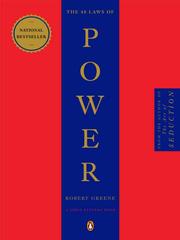 AI Recommendation
The 48 Laws of Power
Robert Greene
Greene's earlier seminal work serves as the strategic predecessor exploring human nature through the lens of power dynamics.
High relevanceExplore- AI Recommendation
The Elephant in the Brain
Kevin Simler and Robin Hanson
Analyzes hidden, self-interested evolutionary motives in human behavior that people regularly deny to themselves.
High relevanceExplore 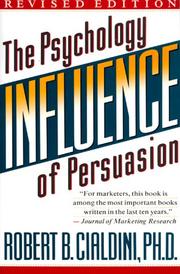 AI Recommendation
Influence: The Psychology of Persuasion
Robert B. Cialdini
Offers an empirical look at the psychological triggers of compliance and persuasion that Greene explores historically.
Medium relevanceExplore- AI Recommendation
The Denial of Death
Ernest Becker
Explores how mortality terror drives human delusion, grandiosity, and culture, mirroring Greene's chapter on the sublime.
Medium relevanceExplore