The Narrow Corridor: States, Societies, and the Fate of Liberty
Daron Acemoglu and James A. RobinsonEN
- Publish date
- 2019-09-24
- Publisher
- Penguin
- Description
Where to read & listen
This page may contain affiliate links. We may earn from qualifying purchases at no additional cost to you.
Book data & covers provided by Google Books and Open Library. Connections and summaries generated with Gemini AI.
Report incorrect dataBooks mentioned & referenced in The Narrow Corridor: States, Societies, and the Fate of Liberty
Suggested by AI, not verified against the full text. Check the original book before using them as a source.
 Citation
The Art of Not Being Governed: An Anarchist History of Upland Southeast Asia
James C. Scott
Illustrates how peripheral populations evade state incorporation to avoid domination by the Despotic Leviathan.
High relevanceExplore- Citation
Society Against the State
Pierre Clastres
Used to illustrate how stateless societies actively prevent centralized authority and maintain the Absent Leviathan.
High relevanceExplore - Citation
Coercion, Capital, and European States, AD 990–1992
Charles Tilly
Draws on Tilly's thesis linking war-making, state capacity, and bargaining between rulers and societal elites.
High relevanceExplore  Citation
The Origins of Political Order: From Prehuman Times to the French Revolution
Francis Fukuyama
Engages Fukuyama's analysis of state-building, the rule of law, and early state development in China.
High relevanceExplore Citation
Democracy in America
Alexis de Tocqueville
Provides foundational insights on civil society mobilizing to check central authority and secure political liberty.
High relevanceExplore- Citation
Why Nations Fail: The Origins of Power, Prosperity, and Poverty
Daron Acemoglu and James A. Robinson
The authors expand their earlier institutional theories to examine liberty and the balance of power.
High relevanceExplore 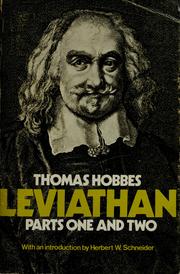 Citation
Leviathan
Thomas Hobbes
Hobbes's theory of state authority introduces the Leviathan concept central to the book's framework.
High relevanceExplore- Citation
The Nuer: A Description of the Modes of Livelihood and Political Institutions of a Nilotic People
E. E. Evans-Pritchard
Exemplifies how stateless societies resolve conflict and enforce norms without formal centralized institutions.
Medium relevanceExplore - Citation
The Muqaddimah: An Introduction to History
Ibn Khaldun
Discusses social cohesion (asabiyyah) and the cyclical rise and fall of political regimes.
Medium relevanceExplore  Citation
Seeing Like a State: How Certain Schemes to Improve the Human Condition Have Failed
James C. Scott
Cites the perils of unchecked state planning and top-down modernization lacking societal feedback.
Medium relevanceExplore Citation
Violence and Social Orders: A Conceptual Framework for Interpreting Recorded Human History
Douglass C. North, John Joseph Wallis, and Barry R. Weingast
Informs the book's perspective on violence management and transitioning toward open access political orders.
Medium relevanceExplore Citation
The Civilizing Process
Norbert Elias
Referenced regarding the monopolization of violence and internalization of social restraints over European history.
Medium relevanceExplore
There may be more citations. We show up to 12 per book to keep the list manageable.
Recommendations
- AI Recommendation
Power and Progress: Our Thousand-Year Struggle Over Technology and Prosperity
Daron Acemoglu and Simon Johnson
Extends the corridor framework to technological change and society's struggle against corporate and state control.
High relevanceExplore 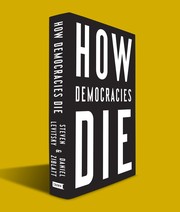 AI Recommendation
How Democracies Die
Steven Levitsky and Daniel Ziblatt
Explores how democratic erosion occurs when institutional norms fail to restrain executive power.
High relevanceExplore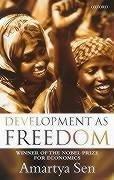 AI Recommendation
Development as Freedom
Amartya Sen
Examines liberty and capability as both the primary means and ultimate goal of societal progress.
Medium relevanceExplore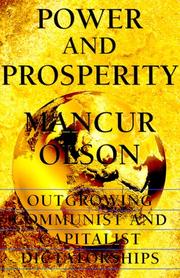 AI Recommendation
Power and Prosperity: Outgrowing Communist and Capitalist Dictatorships
Mancur Olson
Analyzes how stationary bandits monopolize violence and affect long-term economic institutions and liberty.
Medium relevanceExplore AI Recommendation
Political Order and Political Decay: From the Industrial Revolution to the Globalization of Democracy
Francis Fukuyama
Complements the analysis of balancing effective state institutions with democratic accountability and the rule of law.
Medium relevanceExplore- AI Recommendation
The Dawn of Everything: A New History of Humanity
David Graeber and David Wengrow
Offers an anthropological counterpoint regarding the origins of social inequality and the state.
Medium relevanceExplore