
- Publish date
- 2020
- Publisher
- Lulu Press, Inc.
- Description
Where to read & listen
This page may contain affiliate links. We may earn from qualifying purchases at no additional cost to you.
Book data & covers provided by Google Books and Open Library. Connections and summaries generated with Gemini AI.
Report incorrect dataBooks cited in The Psychology of Money
Suggested by AI, not verified against the full text. Check the original book before using them as a source.
 Citation
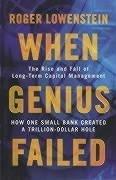
When Genius Failed: The Rise and Fall of Long-Term Capital Management
Roger Lowenstein
Cited to illustrate how extreme leverage and unchecked greed destroyed Long-Term Capital Management.
High relevanceExplore Citation
Thinking, Fast and Slow
Daniel Kahneman
Referenced for insights into human cognitive biases, overconfidence, and flawed decision-making under uncertainty.
High relevanceExplore Citation
Poor Charlie's Almanack
Charles T. Munger
Quoted extensively on human misjudgment, mental models, and the value of avoiding foolishness.
High relevanceExplore Citation
Fooled by Randomness: The Hidden Role of Chance in Life and in the Markets
Nassim Nicholas Taleb
Referenced regarding the pervasive role of luck and hidden variance in financial outcomes.
High relevanceExplore Citation
The Snowball: Warren Buffett and the Business of Life
Alice Schroeder
Cited to show how Warren Buffett's wealth largely stems from decades of uninterrupted compounding.
High relevanceExplore Citation
Manias, Panics, and Crashes: A History of Financial Crises
Charles P. Kindleberger
Cited to demonstrate how investor psychology drives predictable, cyclical historical financial panics.
Medium relevanceExplore Citation
The Great Crash 1929
John Kenneth Galbraith
Cited in discussions on historical market overconfidence and the recurring nature of financial bubbles.
Medium relevanceExplore Citation
Sapiens: A Brief History of Humankind
Yuval Noah Harari
Referenced to discuss how money functions entirely as an imagined reality built on shared fiction.
Medium relevanceExplore Citation
The Intelligent Investor
Benjamin Graham
Referenced regarding the critical psychological importance of maintaining an adequate margin of safety.
Medium relevanceExplore- Citation
The Outsiders: Eight Unconventional CEOs and Their Radically Rational Blueprint for Success
William N. Thorndike
Referenced for unconventional, highly rational approaches to long-term capital allocation.
Medium relevanceExplore
Recommendations
 AI Recommendation
Die with Zero: Getting All You Can from Your Money and Your Life
Bill Perkins
Offers a compelling counterpoint on when to spend wealth rather than continually optimizing for compounding.
High relevanceExplore AI Recommendation
Just Keep Buying
Nick Maggiulli
Provides a data-driven companion framework supporting Housel's behavioral rules on consistent saving and investing.
High relevanceExplore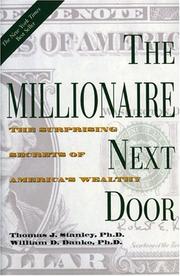 AI Recommendation
The Millionaire Next Door
Thomas J. Stanley and William D. Danko
Parallels Housel's emphasis on living below one's means rather than exhibiting outward displays of wealth.
High relevanceExplore AI Recommendation
Your Money or Your Life
Vicki Robin and Joe Dominguez
Focuses on the subjective value of money as life energy rather than pure accumulation.
Medium relevanceExplore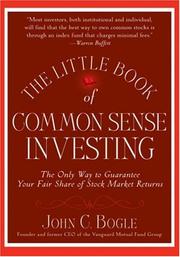 AI Recommendation
The Little Book of Common Sense Investing
John C. Bogle
Shares the behavioral philosophy of simplicity, patience, and minimizing unforced investor errors.
Medium relevanceExplore AI Recommendation
A Random Walk Down Wall Street
Burton G. Malkiel
Complements Housel's views on the futility of forecasting market timing and individual stock picking.
Medium relevanceExplore