- Publish date
- 2012
- Publisher
- Vintage Books
- Description
Where to read & listen
This page may contain affiliate links. We may earn from qualifying purchases at no additional cost to you.
Book data & covers provided by Google Books and Open Library. Connections and summaries generated with Gemini AI.
Report incorrect dataBooks cited in The Righteous Mind
Suggested by AI, not verified against the full text. Check the original book before using them as a source.
 Citation
The Cultural Origins of Human Cognition
Michael Tomasello
Cited for the concept of shared intentionality that distinguishes human social cooperation from other primates.
High relevanceExplore Citation
Unto Others
Elliott Sober and David Sloan Wilson
Supplied theoretical defense of multilevel selection, central to Haidt's argument that humans are partly group-selected.
High relevanceExplore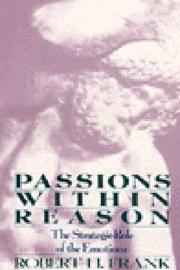 Citation
Passions Within Reason
Robert H. Frank
Demonstrates how moral emotions function as strategic commitment devices in social interactions.
High relevanceExplore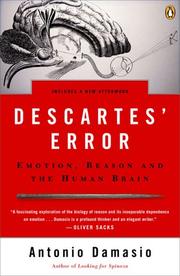 Citation
Descartes' Error
Antonio Damasio
Provided neurological evidence that emotion is necessary for rational decision-making, influencing Haidt's social intuitionist model.
High relevanceExplore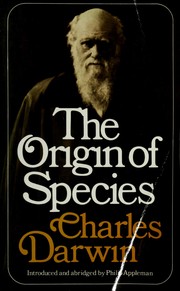 Citation
The Descent of Man
Charles Darwin
Cited for foundational observations on the evolutionary origins of human morality and early theories of group selection.
High relevanceExplore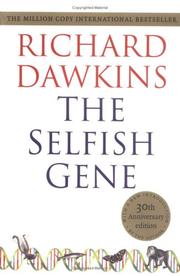 Citation
The Selfish Gene
Richard Dawkins
Referenced in debates concerning gene-level versus group-level selection in the evolution of altruism.
Medium relevanceExplore Citation
The Blank Slate
Steven Pinker
Cited regarding the innate architecture of the human mind versus radical social constructivism.
Medium relevanceExplore Citation
The Evolution of Cooperation
Robert Axelrod
Cited to explain the game-theoretic foundations of fairness, reciprocity, and tit-for-tat strategies.
Medium relevanceExplore Citation
The Adapted Mind
Jerome H. Barkow, Leda Cosmides, and John Tooby
Cited as an essential framework for understanding modularity in evolutionary psychology.
Medium relevanceExplore Citation
Consilience
Edward O. Wilson
Inspired the integration of evolutionary biology, anthropology, and psychology into a unified moral science.
Medium relevanceExplore
Recommendations
- AI Recommendation
Moral Tribes
Joshua Greene
Offers a dual-process utilitarian perspective on resolving inter-group moral conflict.
High relevanceExplore  AI Recommendation
Thinking, Fast and Slow
Daniel Kahneman
Complements Haidt's intuition-first model through cognitive System 1 and System 2 processing frameworks.
High relevanceExplore AI Recommendation
The Enigma of Reason
Hugo Mercier and Dan Sperber
Reinforces Haidt's claim that reason evolved primarily for persuasion and social justification rather than truth-seeking.
High relevanceExplore AI Recommendation
Behave
Robert Sapolsky
Explores the neurobiological and evolutionary mechanisms underlying tribalism, aggression, and cooperation.
Medium relevanceExplore AI Recommendation
The Secret of Our Success
Joseph Henrich
Expands on Haidt's themes of cultural evolution, norm enforcement, and human ultrasociality.
Medium relevanceExplore- AI Recommendation
Why We're Polarized
Ezra Klein
Applies moral and identity psychology to modern institutional and political divides in America.
Medium relevanceExplore