- Publish date
- 1955
- Publisher
- The University of Chicago Press
- Description
Where to read & listen
This page may contain affiliate links. We may earn from qualifying purchases at no additional cost to you.
Book data & covers provided by Google Books and Open Library. Connections and summaries generated with Gemini AI.
Report incorrect dataBooks cited in The Structure of Scientific Revolutions
Suggested by AI, not verified against the full text. Check the original book before using them as a source.
- Citation
Genesis and Development of a Scientific Fact
Ludwik Fleck
Acknowledged in the preface as anticipating Kuhn's core concepts of thought collectives and paradigms.
High relevanceExplore  Citation
Personal Knowledge
Michael Polanyi
Cited for the concept of tacit knowledge that scientific communities rely on during normal science.
High relevanceExplore Citation
Patterns of Discovery
Norwood Russell Hanson
Cited regarding the theory-ladenness of observation and perceptual gestalt shifts in scientific observation.
High relevanceExplore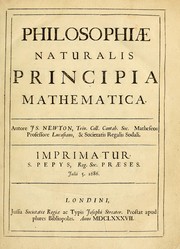 Citation
Philosophiae Naturalis Principia Mathematica
Isaac Newton
Examined as the foundational exemplar establishing a paradigm for classical mechanics.
High relevanceExplore Citation
Études Galiléennes
Alexandre Koyré
Heavily influenced Kuhn's historiography and understanding of conceptual shifts in the Scientific Revolution.
High relevanceExplore Citation
The Logic of Scientific Discovery
Karl Popper
Cited critically regarding demarcation, falsificationism, and the rarity of revolutionary tests in science.
High relevanceExplore Citation
De revolutionibus orbium coelestium
Nicolaus Copernicus
Analyzed extensively as the quintessential historical exemplar of a paradigm crisis and revolution.
High relevanceExplore Citation
Traite Elementaire de Chimie
Antoine Lavoisier
Analyzed in detail as the prime example of a chemical revolution displacing phlogiston.
Medium relevanceExplore Citation
An Essay on Metaphysics
R. G. Collingwood
Cited for its philosophical analysis of absolute presuppositions underlying scientific eras.
Medium relevanceExplore Citation
The Aim and Structure of Physical Theory
Pierre Duhem
Referenced regarding holistic underdetermination and how theories resist piecemeal refutation by anomalous observations.
Medium relevanceExplore Citation
The Child's Conception of the World
Jean Piaget
Referenced in discussion of perceptual categories and how conceptual frameworks guide developmental understanding.
Medium relevanceExplore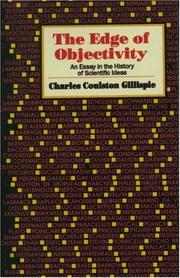 Citation
The Edge of Objectivity
Charles Coulston Gillispie
Cited as a prominent contemporary historical reference on scientific development.
Medium relevanceExplore
There may be more citations. We show up to 12 per book to keep the list manageable.
Recommendations
 AI Recommendation
Against Method
Paul Feyerabend
Pushes incommensurability further into methodological anarchism, arguing against fixed universal scientific rules.
High relevanceExplore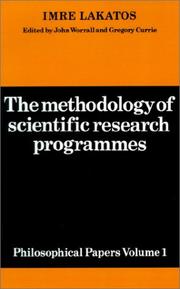 AI Recommendation
The Methodology of Scientific Research Programmes
Imre Lakatos
Synthesizes Kuhn's sociological paradigms with Popper's rational methodology to evaluate progressive research programmes.
High relevanceExplore AI Recommendation
Knowledge and Social Imagery
David Bloor
Foundational text of the Strong Programme, sociologizing Kuhn's views on scientific belief systems.
Medium relevanceExplore- AI Recommendation
Laboratory Life: The Construction of Scientific Facts
Bruno Latour and Steve Woolgar
Extends Kuhn's community focus into anthropological field study of daily scientific practice.
Medium relevanceExplore 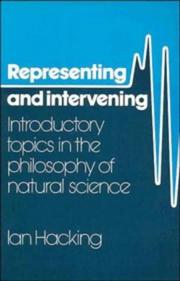 AI Recommendation
Representing and Intervening
Ian Hacking
Examines scientific realism post-Kuhn, focusing on experiment rather than purely theoretical paradigm shifts.
Medium relevanceExplore AI Recommendation
The Scientific Image
Bas C. van Fraassen
Presents constructive empiricism as an alternative anti-realist interpretation of scientific theoretical change.
Medium relevanceExplore