The Stuff of Thought
Steven PinkerEN
- Publish date
- 2007-09-11
- Publisher
- Penguin
- Description
Where to read & listen
This page may contain affiliate links. We may earn from qualifying purchases at no additional cost to you.
Book data & covers provided by Google Books and Open Library. Connections and summaries generated with Gemini AI.
Report incorrect dataBooks mentioned & referenced in The Stuff of Thought
Suggested by AI, not verified against the full text. Check the original book before using them as a source.
- Citation
Metaphors We Live By
George Lakoff and Mark Johnson
Evaluated and critiqued regarding the extent to which human thought is fundamentally structured by conceptual metaphors.
High relevanceExplore - Citation
Interaction Ritual: Essays on Face-to-Face Behavior
Erving Goffman
Informs Pinker's analysis of politeness, social face, and why people use innuendo to preserve interpersonal relationships.
High relevanceExplore 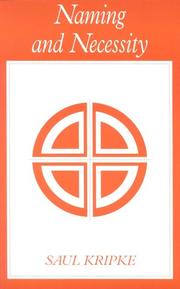 Citation
Naming and Necessity
Saul A. Kripke
Cited in the discussion of proper names, direct reference, and how words connect to reality without relying purely on descriptive definitions.
High relevanceExplore- Citation
Semantic Structures
Ray Jackendoff
Provides the foundational conceptual semantics framework that Pinker draws upon to analyze how verbs represent space, time, and causation.
High relevanceExplore - Citation
The Strategy of Conflict
Thomas C. Schelling
Supplies the game-theoretic models of coordination and mutual knowledge used to explain indirect speech and veiled threats.
High relevanceExplore  Citation
Philosophical Investigations
Ludwig Wittgenstein
Referenced for ideas on family resemblance categories and the nature of linguistic meaning as social usage.
Medium relevanceExplore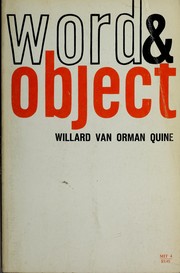 Citation
Word and Object
Willard Van Orman Quine
Discussed regarding the indeterminacy of translation and how children solve the riddle of learning what words refer to.
Medium relevanceExplore Citation
An Essay Concerning Human Understanding
John Locke
Discussed as the classic empiricist statement on words standing directly for ideas in the mind.
Medium relevanceExplore- Citation
Women, Fire, and Dangerous Things
George Lakoff
Engaged with on theories of categorization, cognitive models, and linguistic relativity.
Medium relevanceExplore  Citation
The Language Instinct
Steven Pinker
Referenced as Pinker's earlier work establishing the evolutionary and cognitive basis of grammar.
Medium relevanceExplore Citation
Foundations of Language: Brain, Meaning, Grammar, Evolution
Ray Jackendoff
Cited as a modern synthesis of how syntax, phonology, and semantic concepts interface in the mind.
Medium relevanceExplore Citation
Syntactic Structures
Noam Chomsky
Referenced in the history of generative grammar and the debate over the independence of syntax from semantics.
Medium relevanceExplore
There may be more citations. We show up to 12 per book to keep the list manageable.
Recommendations
 AI Recommendation
Words and Rules: The Ingredients of Language
Steven Pinker
A natural companion analyzing how the dual mechanisms of memorized words and combinatorial rules shape linguistic cognition.
High relevanceExplore- AI Recommendation
Through the Language Glass: Why the World Looks Different in Other Languages
Guy Deutscher
Explores the empirical limits and reality of linguistic relativity, directly engaging themes Pinker debates in semantics.
High relevanceExplore  AI Recommendation
The Origin of Concepts
Susan Carey
Examines the developmental origins of core human concepts like number, objecthood, and agency that semantics encodes.
Medium relevanceExplore AI Recommendation
The Secret Life of Pronouns: What Our Words Say About Us
James W. Pennebaker
Presents empirical psychological research showing how subconscious word choices reflect underlying social and emotional states.
Medium relevanceExplore- AI Recommendation
Thinking, Fast and Slow
Daniel Kahneman
Provides complementary cognitive science on framing effects and intuitive versus deliberative thought.
Medium relevanceExplore  AI Recommendation
I Is an Other: The Secret Life of Metaphor and How It Shapes the Way We See the World
James Geary
Offers an accessible investigation into how metaphorical thinking permeates language, science, and everyday life.
Medium relevanceExplore