
The Will to Meaning
Viktor E. FranklEN
- Publish date
- 1969
- Publisher
- World Pub. Co
- Description
Where to read & listen
This page may contain affiliate links. We may earn from qualifying purchases at no additional cost to you.
Book data & covers provided by Google Books and Open Library. Connections and summaries generated with Gemini AI.
Report incorrect dataBooks mentioned & referenced in The Will to Meaning
Suggested by AI, not verified against the full text. Check the original book before using them as a source.
 Citation
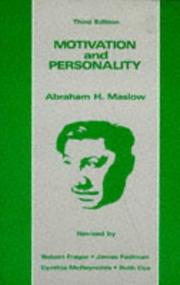
Motivation and Personality
Abraham H. Maslow
Frankl critically examines Maslow's hierarchy of needs, arguing that self-actualization is a byproduct of self-transcendence rather than the ultimate goal.
High relevanceExplore Citation
Beyond the Pleasure Principle
Sigmund Freud
Frankl contrasts his concept of the 'will to meaning' against the Freudian 'pleasure principle' (will to pleasure).
High relevanceExplore Citation
Formalism in Ethics and Non-Formal Ethics of Values
Max Scheler
Scheler's phenomenological value theory serves as a major philosophical pillar for Frankl's concept of objective values and dimensional ontology.
High relevanceExplore Citation
Twilight of the Idols
Friedrich Nietzsche
Frankl references Nietzsche's famous maxim that he who has a 'why' to live can bear almost any 'how'.
High relevanceExplore Citation
The Practice and Theory of Individual Psychology
Alfred Adler
Frankl contrasts logotherapy with Adlerian individual psychology, differentiating the will to meaning from the 'will to power'.
High relevanceExplore- Citation
Being and Nothingness
Jean-Paul Sartre
Frankl contrasts his perspective that meaning is discovered with Sartre's claim that meaning must be arbitrarily invented.
Medium relevanceExplore  Citation
Modern Man in Search of a Soul
Carl Gustav Jung
Frankl discusses Jung's recognition that neuroses often stem from spiritual distress and a loss of ultimate meaning.
Medium relevanceExplore- Citation
Being and Time
Martin Heidegger
Heidegger's existential analysis of human being-in-the-world is referenced in defining the ontological framework of logotherapy.
Medium relevanceExplore  Citation
Becoming: Basic Considerations for a Psychology of Personality
Gordon W. Allport
Frankl refers to Allport's work on human motivation and the self-transcending nature of human personality.
Medium relevanceExplore Citation
General Psychopathology
Karl Jaspers
Frankl invokes Jaspers' concept of boundary situations and philosophical approach to psychiatric illness.
Medium relevanceExplore- Citation
The World as Will and Representation
Arthur Schopenhauer
Frankl cites Schopenhauer when addressing the universal problem of the existential vacuum, boredom, and suffering.
Medium relevanceExplore
Recommendations
 AI Recommendation
Existential Psychotherapy
Irvin D. Yalom
Provides a comprehensive clinical formulation of existential psychotherapy, expanding upon the themes of meaninglessness and death addressed by Frankl.
High relevanceExplore AI Recommendation
The Courage to Be
Paul Tillich
Examines existential anxiety and the ontological courage required to find meaning amid despair, complementing Frankl's psychological view.
High relevanceExplore AI Recommendation
Man's Search for Meaning
Viktor E. Frankl
Frankl's widely known autobiographical account and introductory exposition of logotherapy, which directly preceded this more technical theoretical work.
High relevanceExplore AI Recommendation
Love and Will
Rollo May
Explores the loss of values and the crisis of apathy in modern society from an American existential-humanistic perspective.
High relevanceExplore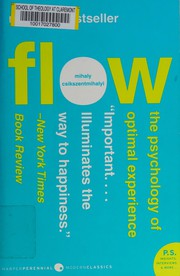 AI Recommendation
Flow: The Psychology of Optimal Experience
Mihaly Csikszentmihalyi
Offers an empirical psychological investigation into human engagement, absorption, and finding purpose in daily activities.
Medium relevanceExplore