
The Will to Power
Friedrich NietzscheEN
- Publish date
- 1883
- Publisher
- Adamant Media Corporation
- Description
Where to read & listen
This page may contain affiliate links. We may earn from qualifying purchases at no additional cost to you.
Book data & covers provided by Google Books and Open Library. Connections and summaries generated with Gemini AI.
Report incorrect dataBooks mentioned & referenced in The Will to Power
Suggested by AI, not verified against the full text. Check the original book before using them as a source.
 Citation
The Republic
Plato
Nietzsche fiercely attacks Platonic idealism and the doctrine of forms as early symptoms of decadence and nihilism.
High relevanceExplore Citation
Ethics
Baruch Spinoza
Nietzsche examines Spinoza's conatus and rationalism, recognizing a kindred spirit while rejecting his ascetic inclinations.
High relevanceExplore Citation
The Prince
Niccolò Machiavelli
Machiavelli's political realism and amoral analysis of power serve as key inspirations for Nietzsche's master morality.
High relevanceExplore Citation
The World as Will and Representation
Arthur Schopenhauer
Nietzsche continuously engages with Schopenhauer's metaphysics of the will, transforming it from denial into affirmation.
High relevanceExplore- Citation
Critique of Pure Reason
Immanuel Kant
Nietzsche critiques Kantian epistemology, rejecting things-in-themselves and synthetic a priori judgments as philosophical fictions.
High relevanceExplore  Citation
On the Origin of Species
Charles Darwin
Nietzsche challenges Darwinian survival of the fittest, arguing that life seeks power rather than mere self-preservation.
High relevanceExplore Citation
First Principles
Herbert Spencer
Nietzsche critiques Spencer's mechanistic evolutionism and utilitarian ethics as vulgar and physiologically misinformed.
Medium relevanceExplore Citation
Meditations on First Philosophy
René Descartes
Nietzsche deconstructs the Cartesian cogito, arguing that 'I think' is an unproven grammatical prejudice.
Medium relevanceExplore Citation
Phenomenology of Spirit
G.W.F. Hegel
Nietzsche rejects Hegelian historicism and dialectics as thinly veiled theological optimism.
Medium relevanceExplore
Recommendations
 AI Recommendation
Nietzsche
Martin Heidegger
Heidegger offers a monumental reading of The Will to Power as the culmination of Western metaphysics.
High relevanceExplore AI Recommendation
Nietzsche and Philosophy
Gilles Deleuze
Deleuze reconstructs Nietzsche's concepts of the will to power and eternal return as a coherent anti-Hegelian system.
High relevanceExplore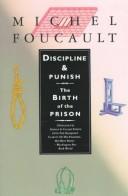 AI Recommendation
Discipline and Punish
Michel Foucault
Foucault applies Nietzsche's genealogy and power dynamics to the development of modern disciplinary institutions.
Medium relevanceExplore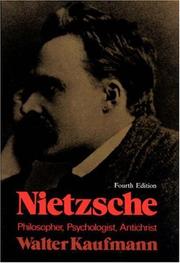 AI Recommendation
Nietzsche: Philosopher, Psychologist, Antichrist
Walter Kaufmann
Kaufmann's seminal study critically contextualizes the posthumous compiled text of The Will to Power.
Medium relevanceExplore