The Willpower Instinct
Kelly McGonigalEN
- Publish date
- 2011-12-29
- Publisher
- Penguin
- Description
Where to read & listen
This page may contain affiliate links. We may earn from qualifying purchases at no additional cost to you.
Book data & covers provided by Google Books and Open Library. Connections and summaries generated with Gemini AI.
Report incorrect dataBooks mentioned & referenced in The Willpower Instinct
Suggested by AI, not verified against the full text. Check the original book before using them as a source.
- Citation
White Bears and Other Unwanted Thoughts
Daniel M. Wegner
Provides foundational research on ironic rebound and the pitfalls of thought suppression.
High relevanceExplore - Citation
Breakdown of Will
George Ainslie
Analyzes hyperbolic discounting and how immediate rewards hijack future goals.
High relevanceExplore  Citation
Willpower: Rediscovering the Greatest Human Strength
Roy F. Baumeister and John Tierney
Explores the muscle model of self-control and ego depletion research.
High relevanceExplore- Citation
The Compass of Pleasure
David J. Linden
Explains dopamine's role in craving, addiction, and reward-seeking behavior.
Medium relevanceExplore 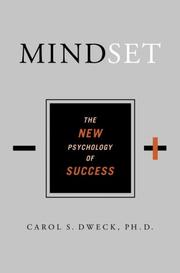 Citation
Mindset: The New Psychology of Success
Carol S. Dweck
Demonstrates how beliefs about effort and failure shape self-regulatory endurance.
Medium relevanceExplore- Citation
Why Zebras Don't Get Ulcers
Robert M. Sapolsky
Details the physiological impact of chronic stress on the prefrontal cortex.
Medium relevanceExplore - Citation
Thinking, Fast and Slow
Daniel Kahneman
Frames the dual-system model of impulsive instincts versus deliberate executive function.
Medium relevanceExplore - Citation
Nudge
Richard H. Thaler and Cass R. Sunstein
Examines how choice architecture and precommitment devices mitigate willpower failures.
Medium relevanceExplore - Citation
The Paradox of Choice
Barry Schwartz
Discusses how excessive options exhaust cognitive control and lead to decision fatigue.
Medium relevanceExplore - Citation
Full Catastrophe Living
Jon Kabat-Zinn
Presents mindfulness techniques that strengthen attention and reduce impulsive stress responses.
Medium relevanceExplore
Recommendations
- AI Recommendation
The Marshmallow Test
Walter Mischel
Examines the mechanisms of delayed gratification and cognitive strategies for self-regulation.
High relevanceExplore 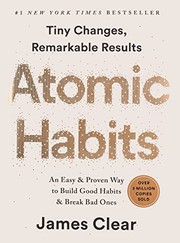 AI Recommendation
Atomic Habits
James Clear
Translates self-control science into practical environmental design to bypass willpower limits.
High relevanceExplore- AI Recommendation
The Power of Habit
Charles Duhigg
Complements willpower research by showing how automated loops conserve executive self-control.
High relevanceExplore 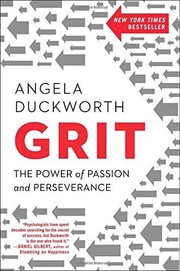 AI Recommendation
Grit: The Power of Passion and Perseverance
Angela Duckworth
Investigates long-term sustained effort toward goals beyond momentary self-control challenges.
Medium relevanceExplore- AI Recommendation
Good Habits, Bad Habits
Wendy Wood
Argues that contextual cues, rather than raw willpower, drive sustainable behavior change.
Medium relevanceExplore - AI Recommendation
How to Change
Katy Milkman
Applies behavioral economics and psychology to conquer self-control barriers like temptation and forgetfulness.
Medium relevanceExplore