
The Worldly Philosophers
Robert L. HeilbronerEN
- Publish date
- 1953
- Publisher
- Franklin Watts, Incorporated
- Description
Where to read & listen
This page may contain affiliate links. We may earn from qualifying purchases at no additional cost to you.
Book data & covers provided by Google Books and Open Library. Connections and summaries generated with Gemini AI.
Report incorrect dataBooks mentioned & referenced in The Worldly Philosophers
Suggested by AI, not verified against the full text. Check the original book before using them as a source.
 Citation
An Essay on the Principle of Population
Thomas Robert Malthus
Analyzed for its grim thesis that population naturally outstrips food supply, earning economics its dismal reputation.
High relevanceExplore Citation
The Wealth of Nations
Adam Smith
Heilbroner examines Smith's central vision of the market mechanism and the invisible hand driving societal wealth.
High relevanceExplore- Citation
The Communist Manifesto
Karl Marx and Friedrich Engels
Presented as the revolutionary and concise articulation of historical materialism and the struggle between classes.
High relevanceExplore  Citation
The General Theory of Employment, Interest and Money
John Maynard Keynes
Detailed as the revolutionary framework that explained persistent macroeconomic depression and justified state intervention.
High relevanceExplore Citation
Capital
Karl Marx
Dissected in detail to explain Marx's critique of surplus value and the inherent systemic crises of capitalism.
High relevanceExplore Citation
Capitalism, Socialism and Democracy
Joseph Schumpeter
Explored for its theory of creative destruction and its provocative predictions regarding the bureaucratic decline of capitalism.
High relevanceExplore Citation
The Theory of the Leisure Class
Thorstein Veblen
Examined for its satirical and anthropological exposure of conspicuous consumption and predatory institutions.
High relevanceExplore Citation
Principles of Political Economy and Taxation
David Ricardo
Explored as the abstract, rigorous formulation of classical distribution, rents, and class conflict.
High relevanceExplore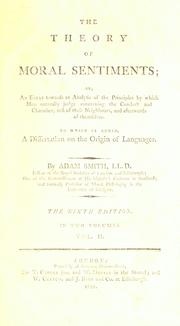 Citation
The Theory of Moral Sentiments
Adam Smith
Discussed as the moral and philosophical foundation that precedes and frames Smith's economic analysis.
Medium relevanceExplore Citation
The Economic Consequences of the Peace
John Maynard Keynes
Discussed as Keynes's impassioned critique of the punitive reparations imposed by the Versailles Treaty.
Medium relevanceExplore Citation
Progress and Poverty
Henry George
Featured in the discussion of the nineteenth-century economic underworld and the crusade for a single land tax.
Medium relevanceExplore Citation
A New View of Society
Robert Owen
Referenced in the profile of Owen's visionary and experimental efforts to build humane socialist communities.
Medium relevanceExplore
There may be more citations. We show up to 12 per book to keep the list manageable.
Recommendations
 AI Recommendation
Economics in Perspective: A Critical History
John Kenneth Galbraith
A witty and accessible historical survey tracing economic doctrines through the context of their contemporary times.
High relevanceExplore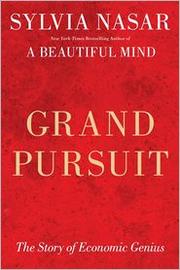 AI Recommendation
Grand Pursuit: The Story of Economic Genius
Sylvia Nasar
A modern narrative history exploring how major economic thinkers sought to overcome widespread poverty.
High relevanceExplore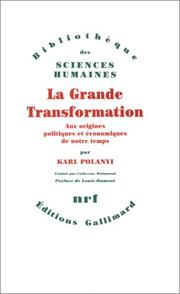 AI Recommendation
The Great Transformation
Karl Polanyi
A foundational sociological history examining the disruptive social consequences of establishing free-market capitalism.
High relevanceExplore AI Recommendation
Economics: The User's Guide
Ha-Joon Chang
Introduces and contrasts diverse historical schools of economic thought for a contemporary audience.
Medium relevanceExplore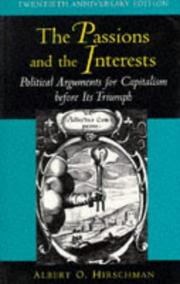 AI Recommendation
The Passions and the Interests
Albert O. Hirschman
Illuminates the intellectual history before Adam Smith that framed commercial interest as a curb on human passions.
Medium relevanceExplore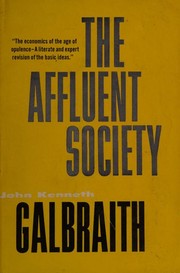 AI Recommendation
The Affluent Society
John Kenneth Galbraith
Builds upon institutionalist traditions like Veblen's to critique post-war production and public squalor.
Medium relevanceExplore