
Understanding Media
Marshall McLuhanEN
- Publish date
- 1964
- Publisher
- Routledge
- Description
Where to read & listen
This page may contain affiliate links. We may earn from qualifying purchases at no additional cost to you.
Book data & covers provided by Google Books and Open Library. Connections and summaries generated with Gemini AI.
Report incorrect dataBooks mentioned & referenced in Understanding Media
Suggested by AI, not verified against the full text. Check the original book before using them as a source.
 Citation
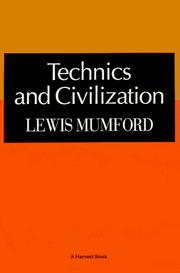
Technics and Civilization
Lewis Mumford
Cited extensively for its insights on how the mechanical clock and technological developments restructured human perception and labor.
High relevanceExplore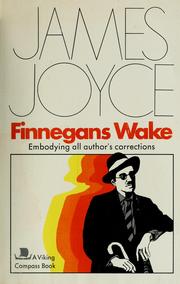 Citation
Finnegans Wake
James Joyce
Frequently quoted as a prophetic literary exploration of the simultaneous, acoustic world created by the electric age.
High relevanceExplore Citation
The Stress of Life
Hans Selye
Cited to develop McLuhan's concept of 'auto-amputation' as a physical defense mechanism against sensory overload caused by media.
High relevanceExplore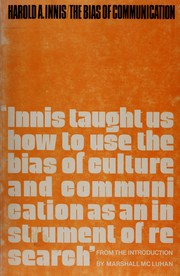 Citation
The Bias of Communication
Harold Innis
Provides the foundational framework on how communication media historically shape the spatial and temporal organization of empires.
High relevanceExplore Citation
Civilization and Its Discontents
Sigmund Freud
Referenced regarding the concept of man as a 'prosthetic god' through the extension of bodily organs into technology.
Medium relevanceExplore Citation
Democracy in America
Alexis de Tocqueville
Used to illustrate the homogenizing and unifying effects of widespread print literacy on national culture.
Medium relevanceExplore- Citation
Creative Evolution
Henri Bergson
Referenced regarding the visual and mechanistic fragmentation of perception compared to organic duration.
Medium relevanceExplore  Citation
Medieval Technology and Social Change
Lynn White Jr.
Used to show how specific technological inventions, such as the stirrup, dramatically reorganized social hierarchy.
Medium relevanceExplore Citation
The Lonely Crowd
David Riesman
Cited in contrasting the 'inner-directed' character molded by print with the 'other-directed' character created by electronic media.
Medium relevanceExplore Citation
The Silent Language
Edward T. Hall
Referenced regarding non-verbal communication and cultural spatial extensions.
Medium relevanceExplore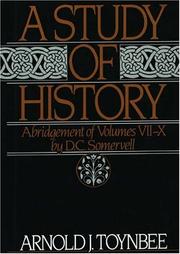 Citation
A Study of History
Arnold J. Toynbee
Referenced for the concept of challenge and response to explain how societies react to sudden technological shifts.
Medium relevanceExplore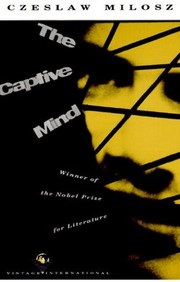 Citation
The Captive Mind
Czeslaw Milosz
Referenced in analyzing the psychological impact of ideological control and electric media environments.
Medium relevanceExplore
There may be more citations. We show up to 12 per book to keep the list manageable.
Recommendations
 AI Recommendation
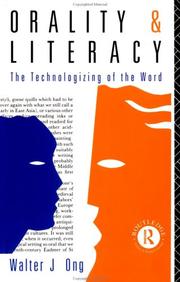
Orality and Literacy
Walter J. Ong
Explores the psychological and cultural differences between oral societies and chirographic or print societies.
High relevanceExplore AI Recommendation
Simulacra and Simulation
Jean Baudrillard
Radicalizes McLuhan's ideas by exploring how electronic media replace reality with hyperreal signs and simulations.
High relevanceExplore AI Recommendation
Amusing Ourselves to Death
Neil Postman
A prominent application of media ecology that examines the epistemological decay caused by television displacing the printed word.
High relevanceExplore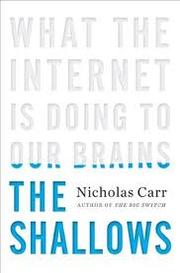 AI Recommendation
The Shallows: What the Internet Is Doing to Our Brains
Nicholas Carr
Applies McLuhan's theories of sensory extension and cognitive reorganization to the digital age and internet use.
Medium relevanceExplore- AI Recommendation
The Rise of the Network Society
Manuel Castells
Detailed sociological analysis of the global shift from industrial economies to network-based information societies.
Medium relevanceExplore 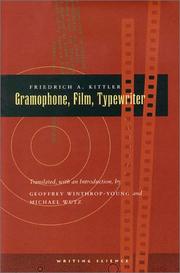 AI Recommendation
Gramophone, Film, Typewriter
Friedrich Kittler
A media theory milestone that builds on McLuhan to analyze how technical media record, store, and process data.
Medium relevanceExplore