Why Nations Fail: The Origins of Power, Prosperity, and Poverty
Daron Acemoglu and James A. Robinson
- Publish date
- 2012
- Publisher
- Crown Publishers
- Description
Where to read & listen
This page may contain affiliate links. We may earn from qualifying purchases at no additional cost to you.
Book data & covers provided by Google Books and Open Library. Connections and summaries generated with Gemini AI.
Report incorrect dataBooks cited in Why Nations Fail: The Origins of Power, Prosperity, and Poverty
Suggested by AI, not verified against the full text. Check the original book before using them as a source.
 Citation
Violence and Social Orders
Douglass C. North, John Joseph Wallis, and Barry R. Weingast
Closely aligned companion analysis exploring how societies transition from limited to open access orders.
High relevanceExplore Citation
Economic Origins of Dictatorship and Democracy
Daron Acemoglu and James A. Robinson
The authors' foundational academic predecessor formalizing the game-theoretic mechanics of institutional change.
High relevanceExplore Citation
The Wealth and Poverty of Nations
David S. Landes
Argued against regarding the hypothesis that cultural differences drive divergent economic fortunes.
High relevanceExplore- Citation
Institutions, Institutional Change and Economic Performance
Douglass C. North
Provides the foundational institutional economic framework upon which the authors build their central thesis.
High relevanceExplore  Citation
Guns, Germs, and Steel
Jared Diamond
Explicitly criticized to refute geographic explanations for global economic and development disparities.
High relevanceExplore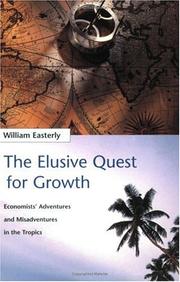 Citation
The Elusive Quest for Growth
William Easterly
Draws on this work to critique naive foreign aid policies that ignore institutional incentives.
Medium relevanceExplore Citation
The Protestant Ethic and the Spirit of Capitalism
Max Weber
Directly challenged to dismiss cultural and religious determinism as root causes of prosperity.
Medium relevanceExplore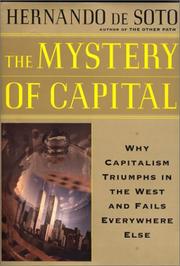 Citation
The Mystery of Capital
Hernando de Soto
Referenced concerning the critical role of inclusive, formalized property rights for wealth creation.
Medium relevanceExplore
Recommendations
 AI Recommendation
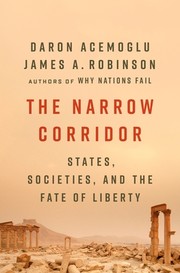
The Narrow Corridor: States, Societies, and the Fate of Liberty
Daron Acemoglu and James A. Robinson
Direct successor examining the delicate struggle between state capacity and societal mobilization.
High relevanceExplore AI Recommendation
The Origins of Political Order
Francis Fukuyama
Complementary historical study of how state capacity, the rule of law, and accountability evolve.
Medium relevanceExplore