Reading guide
Systems Thinking Books: A Reading Guide and Citation Map
Systems thinking looks at how parts of a whole affect each other over time through feedback loops, delays and stocks that build up or drain away. It grew out of cybernetics and system dynamics in the mid-20th century and now shapes how people study businesses, ecosystems, cities and economies.
The guide starts with a short practical primer and moves towards the science of complexity. Under each book you can see the sources it builds on, so you can follow the field back to its founders.
Opens a new “Systems Thinking” canvas you can keep, rename or delete.
Step 1
Thinking in Systems
Donella H. Meadows · 2008
The clearest introduction. Meadows explains stocks, flows and feedback loops with simple examples, and ends with places to intervene in a system.
Explore in BookommendWhat it cites
 The Structure of Scientific Revolutions · Thomas S. KuhnDirectly referenced in discussion of the highest leverage points: changing the system's governing paradigm.View
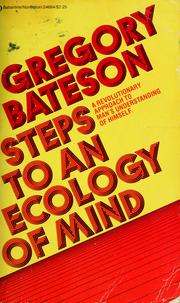 Steps to an Ecology of Mind · Gregory BatesonInfluences Meadows' discussion on information flows, epistemology, and interconnected biological systems.View
 The Fifth Discipline · Peter M. SengeAlso in this guide · Step 2Cited regarding organizational learning and practical system archetypes used to resolve policy resistance.View
The Limits to Growth · Donella H. Meadows, Dennis L. Meadows, Jørgen Randers, and William W. Behrens IIIMeadows' landmark co-authored study modeling global resource depletion and complex system limits.View
Where to read & listen
Step 2
The Fifth Discipline
Peter Senge · 1990
Systems thinking applied to organisations. Senge shows how teams fall into recurring traps and how a learning organisation can avoid them.
Explore in BookommendWhat it cites
 The Path of Least Resistance · Robert FritzSupplies the core concept of structural tension applied to personal mastery.View
 Overcoming Organizational Defenses · Chris ArgyrisDirectly informs Senge's discipline of mental models through double-loop learning and defensive routines.View
 Wholeness and the Implicate Order · David BohmServes as the philosophical basis for Senge's framework on dialogue and team learning.View
 Industrial Dynamics · Jay W. ForresterProvides the foundational system dynamics framework underpinning Senge's discipline of systems thinking.View
Where to read & listen
Step 3
Complexity
M. Mitchell Waldrop · 1992
The story of the Santa Fe Institute, where physicists, biologists and economists began studying how order emerges from many simple parts.
Explore in BookommendWhat it cites
Order Out of Chaos · Ilya Prigogine and Isabelle StengersExplores non-equilibrium thermodynamics and dissipative structures that inspire self-organization theories discussed by researchers.View
 Chaos: Making a New Science · James GleickPrecursor chronicle of nonlinear dynamics establishing the popular foundation for complexity science.View
 Adaptation in Natural and Artificial Systems · John H. HollandFoundational work on genetic algorithms and complex adaptive systems central to the Santa Fe Institute.View
 The Sciences of the Artificial · Herbert A. SimonInfluential work on hierarchy and complex systems architecture framing interdisciplinary computational science.View
Where to read & listen
Step 4
Scale
Geoffrey West · 2015
A physicist looks for shared laws behind the growth of organisms, cities and companies, and why some keep growing while others stall.
Explore in BookommendWhat it cites
 The Death and Life of Great American Cities · Jane JacobsCited for fundamental insights into urban diversity, interactions, and socioeconomic vitality.View
Scaling: Why Is Animal Size So Important? · Knut Schmidt-NielsenA classic empirical precursor examining biological allometry and the physical consequences of animal size.View
On Growth and Form · D'Arcy Wentworth ThompsonA foundational work inspiring the application of physical and geometric constraints to biological growth.View
 The Fire of Life: An Introduction to Animal Energetics · Max KleiberKleiber's law provides the foundational 3/4-power metabolic scaling principle explored throughout the book.View
Where to read & listen
Other perspectives
Critics note that systems models can look precise while resting on uncertain assumptions, and that the language of feedback loops is sometimes applied loosely. Pairing these books with work on forecasting and empirical testing helps keep them grounded.
Citations are suggested by AI and not verified against the full text. This page may contain affiliate links. We may earn from qualifying purchases at no additional cost to you.
Opens a new “Systems Thinking” canvas you can keep, rename or delete.