
- Publish date
- 2009
- Publisher
- Oxford University Press
- Description
Where to read & listen
This page may contain affiliate links. We may earn from qualifying purchases at no additional cost to you.
Book data & covers provided by Google Books and Open Library. Connections and summaries generated with Gemini AI.
Report incorrect dataBooks cited in A Guide to the Good Life
Suggested by AI, not verified against the full text. Check the original book before using them as a source.
 Citation
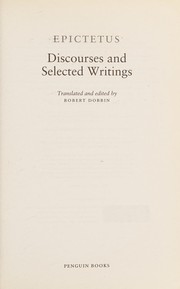
Discourses and Selected Writings
Epictetus
Epictetus provides the foundation for Irvine's discussion on the dichotomy of control.
High relevanceExplore Citation
Philosophy as a Way of Life
Pierre Hadot
Influences Irvine's central thesis that ancient philosophy was meant to be practiced daily.
High relevanceExplore Citation
Meditations
Marcus Aurelius
Irvine heavily draws upon Marcus Aurelius's personal reflections on duty, mortality, and emotional control.
High relevanceExplore Citation
Letters from a Stoic
Seneca
Seneca is extensively cited throughout the book as a primary source for practical Stoic techniques.
High relevanceExplore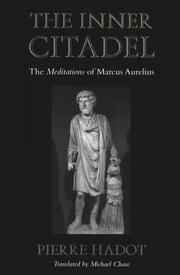 Citation
The Inner Citadel
Pierre Hadot
Referenced for its scholarly analysis of Marcus Aurelius and spiritual exercises in ancient philosophy.
Medium relevanceExplore- Citation
Lives of the Eminent Philosophers
Diogenes Laertius
Used as a historical source for the biographical details and anecdotes of ancient Stoic philosophers.
Medium relevanceExplore - Citation
The Stoic Philosophy of Seneca
E. Vernon Arnold
Referenced regarding the historical development and academic analysis of Roman Stoicism.
Medium relevanceExplore 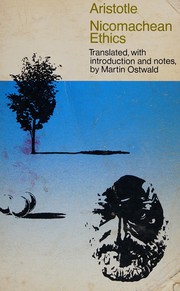 Citation
Nicomachean Ethics
Aristotle
Cited to contrast the Stoic view of eudaimonia with Aristotelian virtue ethics.
Medium relevanceExplore Citation
The Therapy of Desire
Martha C. Nussbaum
Referenced regarding Hellenistic ethics and the concept of philosophy as a medical treatment for the mind.
Medium relevanceExplore Citation
On Ends
Cicero
Cited for historical context on ethical theories in ancient Greece and Rome.
Medium relevanceExplore
Recommendations
 AI Recommendation
Stoicism and the Art of Happiness
Donald Robertson
Combines Stoic philosophy with modern cognitive behavioral therapy principles for mental well-being.
High relevanceExplore AI Recommendation
The Practicing Stoic
Ward Farnsworth
A structured digest of primary Stoic texts organized by central philosophical themes.
High relevanceExplore AI Recommendation
The Obstacle Is the Way
Ryan Holiday
A modern, popular exploration of Stoic philosophy applied to everyday challenges and adversity.
High relevanceExplore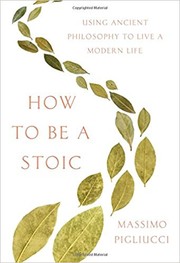 AI Recommendation
How to Be a Stoic
Massimo Pigliucci
Offers a modern guide to applying Stoic philosophy to contemporary life choices.
High relevanceExplore- AI Recommendation
Happy: Finding Joy in Ordinary Day and Letting Go of Perfection
Derren Brown
Re-examines ancient Stoic principles to navigate modern anxiety and the pursuit of happiness.
Medium relevanceExplore - AI Recommendation
The Antidote: Happiness for People Who Can't Stand Positive Thinking
Oliver Burkeman
Explores negative visualization and Stoic approaches to psychological resilience.
Medium relevanceExplore