
- Publish date
- 2005
- Publisher
- Penguin Books
- Description
Where to read & listen
This page may contain affiliate links. We may earn from qualifying purchases at no additional cost to you.
Book data & covers provided by Google Books and Open Library. Connections and summaries generated with Gemini AI.
Report incorrect dataBooks cited in The Black Swan
Suggested by AI, not verified against the full text. Check the original book before using them as a source.
 Citation
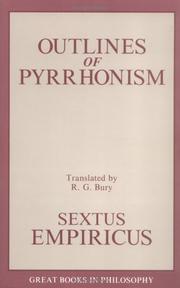
Outlines of Pyrrhonism
Sextus Empiricus
Informs Taleb's adoption of empirical skepticism and suspended judgment regarding unknown risks.
High relevanceExplore Citation
The Logic of Scientific Discovery
Karl Popper
Provides the epistemological foundation for falsificationism and the problem of induction central to the book.
High relevanceExplore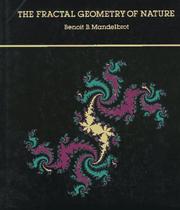 Citation
The Fractal Geometry of Nature
Benoit Mandelbrot
Introduces power laws and fractal distributions fundamental to Taleb's concept of Extremistan.
High relevanceExplore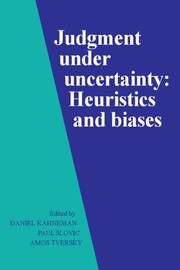 Citation
Judgment Under Uncertainty: Heuristics and Biases
Daniel Kahneman, Paul Slovic, and Amos Tversky
Provides empirical evidence for cognitive distortions that obscure perception of massive, rare events.
High relevanceExplore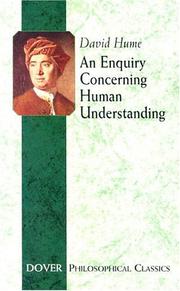 Citation
An Enquiry Concerning Human Understanding
David Hume
Articulates the philosophical problem of induction illustrated by the classic black swan metaphor.
High relevanceExplore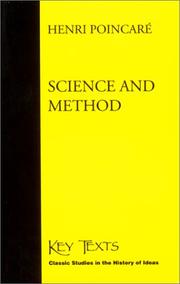 Citation
Science and Method
Henri Poincaré
Examines non-linear dynamical systems and the inherent limits of mathematical forecasting.
Medium relevanceExplore Citation
Essays
Michel de Montaigne
Exemplifies the introspective, non-dogmatic intellectual humility championed throughout the text.
Medium relevanceExplore Citation
Social Theory and Social Structure
Robert K. Merton
Explores cumulative advantage and the Matthew effect governing Extremistan dynamics.
Medium relevanceExplore- Citation
The Use of Knowledge in Society
Friedrich Hayek
Underpins the critique of top-down economic models and centralized knowledge.
Medium relevanceExplore  Citation
Against Method
Paul Feyerabend
Reinforces skepticism toward rigid scientific methodologies and academic institutional certainty.
Medium relevanceExplore Citation
An Introduction to Probability Theory and Its Applications
William Feller
Referenced in discussions on the mathematical foundations and limits of standard probability distributions.
Medium relevanceExplore Citation
The Tartar Steppe
Dino Buzzati
Literary reference depicting a lifetime spent waiting for an unforeseen, transformative event.
Medium relevanceExplore
There may be more citations. We show up to 12 per book to keep the list manageable.
Recommendations
 AI Recommendation
Thinking, Fast and Slow
Daniel Kahneman
Synthesizes dual-system cognitive biases that explain why humans rationalize unexpected tail events post hoc.
High relevanceExplore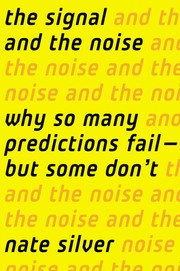 AI Recommendation
The Signal and the Noise
Nate Silver
Investigates the difficulties of probabilistic prediction and human tendencies toward overconfidence across disciplines.
High relevanceExplore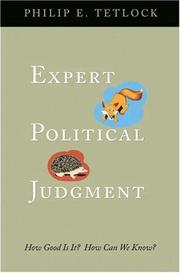 AI Recommendation
Expert Political Judgment
Philip E. Tetlock
Empirically demonstrates that domain experts routinely fail to predict geopolitical and economic shocks.
High relevanceExplore AI Recommendation
The Drunkard's Walk
Leonard Mlodinow
Illustrates how randomness and chance govern outcomes far more than human intent or competence.
Medium relevanceExplore AI Recommendation
Gut Feelings: The Intelligence of the Unconscious
Gerd Gigerenzer
Argues simple heuristics often outperform complex statistical optimization in uncertain, non-Gaussian environments.
Medium relevanceExplore AI Recommendation
Everything Is Obvious: Once You Know the Answer
Duncan J. Watts
Analyzes how retrospective narratives and common sense systematically distort our understanding of complex events.
Medium relevanceExplore