Reading guide
Nassim Taleb's Incerto: Reading Order and Citation Map
The Incerto is Nassim Nicholas Taleb's series of essays on luck, uncertainty and risk. Each book can be read alone, but together they build one argument: we underestimate randomness, rare events shape the world, and systems should be built to gain from shocks rather than break.
This guide follows the order the books were written. Under each one you will find the works Taleb draws on, from ancient philosophers to probability theorists, so you can trace where his ideas come from.
Opens a new “Taleb's Incerto” canvas you can keep, rename or delete.
Step 1
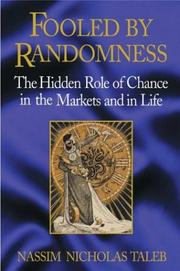
Fooled by Randomness
Nassim Nicholas Taleb · 2001
The first and most approachable book. Taleb shows how traders, executives and the rest of us mistake luck for skill.
Explore in BookommendWhat it cites
An Enquiry Concerning Human Understanding · David HumeIntroduces the classic problem of induction illustrated by the black swan metaphor.View
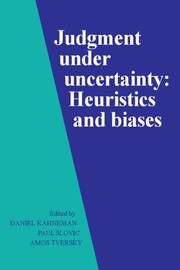 Judgment under Uncertainty: Heuristics and Biases · Daniel Kahneman, Paul Slovic, and Amos TverskyExplores cognitive biases and heuristic errors humans make when assessing probability.View
 The Logic of Scientific Discovery · Karl PopperProvides the epistemological framework of falsificationism that underpins Taleb's critique of induction.View
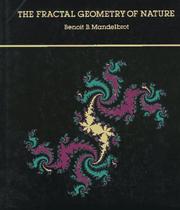 The Fractal Geometry of Nature · Benoit MandelbrotInfluences Taleb's understanding of fat-tailed distributions and roughness in financial markets.View
Where to read & listen
Step 2
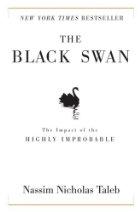
The Black Swan
Nassim Nicholas Taleb · 2005
His best-known work on rare, high-impact events that nobody predicts and everyone explains afterwards.
Explore in BookommendWhat it cites
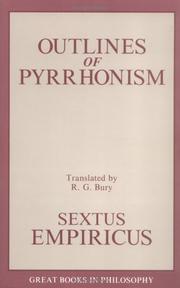 Outlines of Pyrrhonism · Sextus EmpiricusInforms Taleb's adoption of empirical skepticism and suspended judgment regarding unknown risks.View
- The Logic of Scientific Discovery · Karl PopperProvides the epistemological foundation for falsificationism and the problem of induction central to the book.View
- The Fractal Geometry of Nature · Benoit MandelbrotIntroduces power laws and fractal distributions fundamental to Taleb's concept of Extremistan.View
- Judgment Under Uncertainty: Heuristics and Biases · Daniel Kahneman, Paul Slovic, and Amos TverskyProvides empirical evidence for cognitive distortions that obscure perception of massive, rare events.View
Where to read & listen
Step 3
Antifragile
Nassim Nicholas Taleb · 2012
The constructive turn: some things get stronger from stress and disorder, and we can design lives and institutions that way.
Explore in BookommendWhat it cites
- The Black Swan · Nassim Nicholas TalebAlso in this guide · Step 2Establishes the foundational logic of extreme, unexpected events that Antifragile builds upon.View
- Fooled by Randomness · Nassim Nicholas TalebAlso in this guide · Step 1Examines human fallibility in misinterpreting noise as deterministic signal in complex systems.View
- The Logic of Scientific Discovery · Karl PopperInforms the core principle of asymmetry between verification and empirical falsification.View
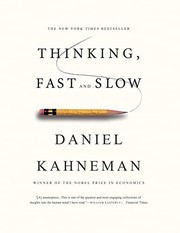 Thinking, Fast and Slow · Daniel KahnemanExplores cognitive biases that lead humans to underestimate volatility and structural risk.View
Where to read & listen

Step 4
Skin in the Game
Nassim Nicholas Taleb · 2017
The ethics of risk. Taleb argues that people who make decisions should share in the downside of being wrong.
Explore in BookommendWhat it cites
 The Code of Hammurabi · HammurabiFrequently cited as the ultimate historical example of legal symmetry and skin in the game.View
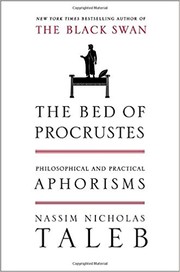 The Antifragile · Nassim Nicholas TalebAlso in this guide · Step 3Taleb explicitly references his prior work as the foundational framework for asymmetry and risk.View
- The Black Swan · Nassim Nicholas TalebAlso in this guide · Step 2Referenced to explain tail risks and the systemic dangers posed by decision-makers without exposure to loss.View
 Ethics · SpinozaCited regarding the symmetry of ethics and the necessity of personal risk in moral action.View
Where to read & listen
Other perspectives
Taleb's style is combative, and some economists and statisticians argue he overstates how often experts ignore rare events. Reading Kahneman's Thinking, Fast and Slow or Tetlock's Superforecasting gives a more measured view of judgement under uncertainty.
Citations are suggested by AI and not verified against the full text. This page may contain affiliate links. We may earn from qualifying purchases at no additional cost to you.
Opens a new “Taleb's Incerto” canvas you can keep, rename or delete.